Showing posts with label Homeschooling. Show all posts

Sunday, February 14, 2016

Truth, Beauty, and Goodness For the Glory of God

Truth, Beauty, Goodness.

I hear this phrase over and over again as a Charlotte Mason/Classical homeschooler. I use it myself. It is one of my highest aims in teaching my children: that they will learn to know and love what is good, and true, and beautiful.

We study math because it is beautiful (oh yes, it is!), and true, and good, not because we must in order for our children to get jobs in the STEM-oriented marketplace when they are grown up. (They may do so, and I will be thankful, but that is not our primary aim.)

We study things that seemingly have no usefulness in passing tests now and getting good jobs later on. We store up beautiful paintings in the galleries of our minds, we listen to glorious music, we revel in words skillfully woven into poetry. We do this to grow as people, to learn to recognize what truly is beautiful, and good, and true, and to develop love for these things.


And yet we do not pursue truth, beauty and goodness for their own sake. As Christians, we pursue these things for the glory of God.

Truth, beauty, and goodness are the glory of God. God is their author. Jesus is The Truth, the ultimate manifestation of God's goodness, the altogether lovely.

Truth, beauty, and goodness matter, but not for their own sake. Anyone can pursue truth, beauty, and goodness, but it will all be worthless in the end if the foundation is wrong.

For no one can lay a foundation other than that which is laid, which is Jesus Christ. Now if anyone builds on the foundation with gold, silver, precious stones, wood, hay, straw— each one’s work will become manifest, for the Day will disclose it, because it will be revealed by fire, and the fire will test what sort of work each one has done. If the work that anyone has built on the foundation survives, he will receive a reward. If anyone’s work is burned up, he will suffer loss, though he himself will be saved, but only as through fire. - 1 Corinthians 3:12-15

Paul is speaking of teaching in the church, but I believe it applies just as well to the teaching we give to our children. I pray that I am building something that will last, even in the teaching I do every day.

The math we study in our homeschool shows forth the glory of the order He built into His creation. The creativity displayed in the music, and art, and poetry we study are a reflection of His glorious creation and of the wonder of man being made in the image of God.

It is for Christ and his kingdom that we seek after truth, beauty, and goodness. It is for God's glory that we love these things, because He is the origin of all that is good, and true, and beautiful in this world.

May we never forget why we are doing what we're doing in our homeschools.


Saturday, August 1, 2015

Saturday Catch-All: First Week, Dudamel, Nature Journal Share

First Week
We just finished the first week of our new school year. Why so early, you ask? Two reasons: We had already had five relaxed weeks and needed to get back into routine, and starting early allows us to be a little more flexible about taking a day off here or there if necessary. We are already planning on a two-week break at the end of August/beginning of September as Stephen takes his vacation then. SA(7) started Year Two using Ambleside Online, and JJ(5) started his "Kindergarten" year. This basically means that I have started reading lessons with him, while he continues to participate in our family outdoor time, reading aloud time, poetry tea time, math activities, etc.

Anyway, I am exhausted today. Homeschooling requires intense interaction with my children, and I had gotten used to less of that during our vacation. As an introvert, all this interaction drains me. I know from last year, though, that I will adjust over time and come up with coping mechanisms to deal with it. And I do love homeschooling with a passion that still surprises me despite this small drawback in my own personality.

The rewards appear daily when I least expect them...
-the twinkle in SA's eye as he's about to narrate something that amused him.
-the effortless use of a big word that he just heard for the first time in reading a week ago.
-the creative engineering of paper airplanes to make them fly better (a collaborative effort between the oldest two).
-JJ's excitement in the discovery of addition facts using Cuisenaire rods.
-the enthusiasm with which all three of them run around gathering fistfuls of flowers for me to draw in my nature journal as I sit peacefully in the grass with the baby.

This is what I will remember, and it is what I choose to think about after the exhausting jumble of chores and schoolwork, discipline challenges and moments of joy, happy lessons and lessons that meet with resistance.
Rejoice in the Lord always; again I will say, rejoice. Let your reasonableness be known to everyone. The Lord is at hand; do not be anxious about anything, but in everything by prayer and supplication with thanksgiving let your requests be made known to God. And the peace of God, which surpasses all understanding, will guard your hearts and your minds in Christ Jesus.
Finally, brothers, whatever is true, whatever is honorable, whatever is just, whatever is pure, whatever is lovely, whatever is commendable, if there is any excellence, if there is anything worthy of praise, think about these things. What you have learned and received and heard and seen in me—practice these things, and the God of peace will be with you.
(Philippians 4:4-8)

Introducing Dudamel 
Our composer this term is Johannes Brahms, and this week's listening was "Variations on a Theme by Haydn." Our music appreciation lesson is very simple. On Thursday morning at teatime, we get our snacks and go watch the piece on YouTube.  Yes, that's all we do. One of my favourite things about watching music on YouTube is that you can often watch the conductor. I love watching conductors! This week's conductor was Gustavo Dudamel. I was immediately struck by his air of calm joyfulness. Curious, I later looked up more videos with him conducting and was amused to see a huge difference in style between his older and younger self, though still the same friendliness and joy (see especially around the 4 1/2 minute mark in that second link). Finally, I looked up his website, and found a fascinating character. Do check it out! You can also find a few interviews on YouTube as well.

Nature Journal Share
If you enjoy nature study, you may like the Mud Puddles to Meteors blog. They also have an active Facebook group, a great place to share your nature walk finds with an appreciative audience! One fun thing Dawn just started there is the Nature Journal Share. She invites anyone in the group to post their nature journal entries on Saturdays with the tag #naturejournalshare. I anticipate that this will be an inspiring event every week. I am not a natural artist, and have been slow to get into the habit of nature journaling, though we love our nature walks here.

My share this week is a small weed...we have so many weeds I don't know the name of! I suspected that this one would have some relation to chamomile because that's what it smelled like to me. Sure enough, it's known as rayless chamomile, or wild chamomile. I think one of its other names, "pineappleweed," will stick with us, though.

And that's all for this week!

Thursday, June 11, 2015

Start. Keep Going. Finish Strong.

I just started a fun little self-improvement project called Couch-to-5K.

Alright. I lie. It's not fun at all...yet. Every time I have gone out for my little walk/run so far, I have had to exert my will and make myself do it. Every time I have started a running interval, I have had to stop myself from worrying about how long and how far, and just focus on staying in the moment. Each time I have completed a week, I have thought, "I can't possibly go on to a more difficult workout next week." But each week I do just that.

I could have spent a lot of time deciding on what kind of shoes I should wear while running, and whether they were the perfect ones for my feet. I may have spent some time deciding on an app for my phone that would be the perfect program to meet my goals. But I'm sure we can agree that these things don't matter nearly as much as me heading out of my front door and actually starting to run.

My homeschooling can be a lot like beginning that running program. I sometimes spend too much time thinking about all my choices beforehand. I read catalogues. I research online. I read about other people's experiences and think too much about whether I'm making the very best choices. But really, the most important thing will end up being how I use the things I choose.

I am planning to teach JJ(4) to read next school year (He is so very ready!). I have a simple phonics program in the house, along with a few Bob Books. I also have the experience of teaching SA(6) to read using some of Charlotte Mason's ideas. Still, I have been looking longingly at programs in glossy homeschool catalogues, and seriously considering books that have worked for my friends. I have not quite made up my mind what we will do yet, but it comes to me that what's really needed here is for me to just start.

I know what to do. I have done it before. The program I choose doesn't really matter as much as sitting down with him every day for five or ten minutes and working on phonics and sight words.

Making good curriculum choices is important. But they do not have to be perfect choices. The curriculum is just a tool to help me reach my goals. In the end, success will be more about whether I faithfully took the time and effort to teach my child what he needs to know.

So start.
And once you've started, keep going.
Don't stop until you've reached the finish line.

Tuesday, May 12, 2015

Review: Successful Homeschooling Made Easy

Once upon a time, a long time ago, I worked for a small company selling homeschool curriculum and resources. The owner of that company was a wise and experienced homeschool mom, and she loved to help new homeschoolers with their questions and concerns and curriculum choices. (She actually hired me so I could do some of the boring business stuff and she could focus more on helping people.) Many, many homeschoolers went from overwhelmed and fearful to encouraged and confident because of her counsel.

Every new homeschooler needs someone like that as they begin homeschooling, but not everyone has someone nearby to help. For those people, Stephanie Walmsley of Successful Homeschooling Made Easy has created an email course (titled the Successful Homeschooling Made Easy Course). This course is designed to help you figure out how to organize your days, choose curriculum, and still get the housework done from the moment you take your children out of school to homeschool them. Lessons are sent out weekly by email for six whole months. Each lesson includes an assignment to help you think through a certain aspect of homeschooling. It is recommended that you set aside some special time for yourself each week to work through the assignment.

"I just pulled my children out of school. What do I do now?"
I belong to a few Facebook homeschool support groups. Every once in a while, someone posts a question something like, "I just pulled my children from school. What do I do next?" Immediately, they are inundated with advice (sometimes conflicting) from fifty homeschoolers with varying levels of experience. The most common advice I see is, "De-school for a while to rediscover your children's interests and rebuild your relationships with them." While I agree with this advice, I realize at the same time that if I was in that situation, I would not have the confidence to follow it for more than a week or two. What do you mean, play games and read books together? Is it really okay to do no schoolwork at all during this time? Stephanie Walmsley takes this lack of confidence into consideration, and comes up with a brilliant plan in her very first lesson. She guides new homeschoolers through making a simple schedule or routine that will work for them, no matter what their style is, and has them include a time for two academic things only: literacy and math (the Three R's, in other words). Why is this so brilliant, you ask? Because she is giving you permission to relax while you figure things out, while at the same time giving you confidence that you are making progress in the basics. Add to this that she is helping you establish a good habit of daily work from the very beginning of your homeschooling journey.

Having laid a foundation for your homeschooling days, you now have the breathing room to ask and answer for yourself, one at a time, all the questions that need to be answered as you homeschool. The course guides you through this process, helping you work through:
Why am I homeschooling?
What do I hope to achieve by homeschooling?
How am I going to get everything done?
How will I keep from getting burnt out?
What homeschooling method will I choose for my family?
How will I choose my curriculum from the bewildering array of options available?
...and many more questions. These are just some of the issues you will begin to think about in just the first nine weeks of the course. (There are twenty-six weeks total.) Put together like this, the questions seem overwhelming, but since they are presented step by step from week to week, you will find you have the space not only to think these things through, but to begin to implement the answers you come up with.

Not Just for Newbies
Though I'm only in my second year of homeschooling, I consider myself a confident homeschooler. Having been homeschooled myself, and having had my hands on almost all of the curriculum choices available through my former job, I have already thought through many of the questions presented by this course. I know I am inexperienced, and I expect that I will learn as I go, and that I will adapt my methods as my circumstances change. However, I also believe I have found the basic educational philosophy and methods that I will stick to throughout my homeschooling career.

Having said that, I still found it helpful to work through this course (I worked through the first nine weeks for this review.). Sometimes we need a reminder of why we're doing this in the first place. It doesn't hurt to think things through once again, and it's always good to learn from the experience of those who have gone before. For that reason, I highly recommend the Successful Homeschooling Made Easy Course, not only to new homeschoolers, but also to those who have been homeschooling for a while. Particularly if you are feeling burnt out or less than confident in any area of homeschooling, you will be benefited by this course.

Stephanie Walmsley has other courses on her website as well, and having seen the quality of this one, I find myself quite curious about her Charlotte Mason Made Easy Course.

To see more reviews of the Successful Homeschooling Made Easy Course, click on the banner below:


Wednesday, May 6, 2015

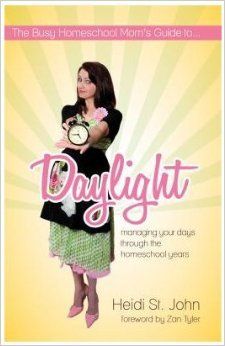
Review: The Busy Homeschool Mom's Guide to Daylight

It's only now, as I near the end of my second year of homeschooling, that I'm beginning to realize what a marathon I've signed up for. I have always known that I would homeschool, and that I would do it for the long haul. With my steady personality, when I committed to homeschooling, I committed all the way. But not having any doubts does not mean that I have no fears. What will it be like to homeschool four boys at once? Will I have what it takes to manage our days? Will I be able to hold on to the priorities God wants me to have? Will we finish strong?

A little e-book from Real Life Press that I read recently for review met me right where I am: “If God has called you to homeschool...then He has already equipped you with everything you need to get the job done.” In her book The Busy Homeschool Mom’s Guide to Daylight, Heidi St. John encouraged me by reminding me that this homeschooling venture will ultimately not be about me and my abilities and energy (or lack thereof), but about God's purposes in each of our lives. St. John also provides a mix of inspiration and practical advice from her own experience on organizing, scheduling, menu planning, homeschooling multiple children at once, and more.

I see myself on a journey as a homeschool mom. I'm learning. Sometimes I wish I was older and wiser right now, without having to go through mistakes and adjustments and a whole lot of hard work. It's just a fact that there will be things that will only be learned by experience in my life. But there are also things that I can learn from the experience of others if I'm just wise enough to take them to heart. This is why I like hearing from veteran homeschoolers, whether in real life or in books like this one. 

The Need for Vision
Three themes really stood out for me in this book: the need for vision, the need for flexibility in our planning, and the need to find encouragement. We all need to take the time once in a while to evaluate how things are going in our home schools, and to consider again what our priorities are and why we are homeschooling.
"Busy homeschool mom, why are you homeschooling? Most moms I know would never, not in a million years, take on homeschooling if they were not driven by something. What's driving you?" (p. 40)
Thinking through our goals and priorities now will help us stay the course when we have frustrating and fruitless days later.

The Need for Flexibility 
The second theme that was helpful for me was that "The key to successful planning is understanding that even the best plans need to be flexible." (p. 43)  St. John reminds us that there are seasons of homeschooling, a sort of natural ebb and flow, and that we need to change our plans and expectations as our lives change. She includes many practical applications of flexibility in planning.

I love her advice to "create some white space" on your calendar. I am a strong believer in white space. I know that right now, with three young children and a baby, I can't handle more than one outing a week (besides church). Back when I had only two children, I remember it was enough to make sure I never went out two days in a row. I anticipate my "white space" needs will change again as my children grow older. That's really what it's all about...taking note of what works for you now and planning accordingly.

I also liked her suggestion that menu planning does not mean that you have to assign days to your meals. I have always found that menu planning works best for me when I plan a variety of simple and more complex meals for the week, and then choose which one to make based on how my day is going.

Flexibility in planning also means changing the plan when it's no longer working for you. I found myself thinking about this when spring suddenly arrived this week. Where last week was cold and miserable (we even had almost 10 cm of snow early last week!), this week is sunny and perfect weather for playing outdoors. My winter routine is just not working for me this week, and I know I will have to change it to allow for hours more time outdoors as the weather gets warmer.

The Need for Encouragement
Heidi St. John speaks of the danger of comparing ourselves with others, and of the impact good friends can have on encouraging us and keeping us accountable. Ultimately, though, we need to find our strength in the Lord.
"I believe that when we find our strength in Christ, we will also find strength for the homeschool years. Is it hard? Yes it is! Do we ever really know what we’re getting ourselves into when we obey the call of God on our lives? I don’t think so!" (p. 193)
I appreciated the encouragement I found in The Busy Homeschool Mom's Guide to Daylight. I would recommend it to any homeschool mom who needs a lift. With its balance of planning and flexibility, I think it will help both the organized and the disorganized to manage their "daylight" better.

This e-book is also available as a physical book at the Real Life Press website.
For more reviews on this book and others from Real Life Press, click on the banner below:


Friday, April 3, 2015

On Finding Your Tribe...And Going Beyond It

just once in a while, for the sake of perspective...


I went to a local homeschool support group meeting this week. I always enjoy these meetings so much. For me, the most valuable thing these meetings give me is a fresh perspective. Every time I go I come away with new ideas. Most importantly, every time I realize again that there are many different ways to homeschool, and am filled with admiration at the level of commitment and creativity so many moms bring to the work of educating their children.

I happen to be very committed to Charlotte Mason's philosophy and methods in my homeschool. I'll admit it...I really, truly think she's the best! And I have found my "tribe" here online in the blogging world. There is a whole network of like-minded Charlotte Mason homeschoolers encouraging and challenging one another, and I am so happy to have found them.

It would be very easy for me just to get all my encouragement from these homeschool moms who think just like me. It is a simple thing now for us to find each other in this age of the internet. We have our own language (does anyone else know what "keeping" means? "commonplace"?). We all rush to read the same books (Last year it was Bestvater's The Living Page, this year it's Karen Glass's Consider This). We follow our fellow tribe members' way of doing things (I'm thinking of my weekly schedule, adapted from someone who adapted it from someone else.). I think this is fine...after all, they're great books, and lovely, helpful things to do.

So why go beyond your tribe? Why make an effort to associate with people with different ideas?

I have found it is like a breath of fresh air into my mind and homeschool to speak with moms whose educational philosophy is different than my own. I am challenged to consider other ideas and re-examine my assumptions.

And I begin to realize...even if these non-CM homeschool moms don't think through Charlotte Mason's philosophy, education still is an atmosphere, a discipline, a life. This is true whether you realize it or not. And you don't have to call yourself a Charlotte Mason homeschooler to provide all three.

I think of my own education at home. We used a boxed curriculum (A Beka) when my parents pulled us out of school when I was in grade 3. Later, we attended an A.C.E. school for a while, then continued homeschooling with the A.C.E. curriculum till the end of high school.

Obviously, I have rejected the boxed curriculum in favour of living books in my own homeschool. And yet, I don't consider myself to have had a bad education because I was homeschooled using these things. That's because the workbooks were not all there was to my education. I was surrounded by a large family with a home business. We had a small hobby farm with a random assortment of animals. Our family played music and sang together. We read voraciously from our extensive home library, which, by the way, contained many living books. There are things I didn't learn (writing, for one), but that ended up being okay because I graduated with the ability and the will to learn whatever I want or need to know. There are many good books that I didn't read during the years I was homeschooled. Guess what? That was okay too! I'm not dead yet. I can still read them.

I see this in the homeschoolers all around me. People choose their own philosophy and methods of education. Perhaps these philosophies and methods are not as perfect (in my opinion) as those of Charlotte Mason. Perhaps everyone could get some balance by reading a bit more Charlotte Mason. And yet... maybe I need some balance, too. Maybe I have something to learn from the eclectic, the relaxed, the unschooling and the classical homeschoolers. Maybe I need to see the energy and the creativity and the work these moms are pouring into their homeschools. Maybe I need to see that their children are graduating and going on to successful careers and happy families.

Let me be clear. Here is what I've learned from going beyond my little Charlotte Mason tribe:

Realizing in your mind that "Education is an Atmosphere, a Discipline, a Life" does not necessarily make you a better homeschooler, living it does. And a person doesn't have to be part of the Charlotte Mason "tribe" to live it. They don't even have to speak the same language, read the same books and blogs, or follow the same schedule.

Now, I do strongly believe in thinking through your philosophy of education. Charlotte Mason has helped me so much with that, and I'd recommend her books to every homeschooler. I call myself a Charlotte Mason home educator, and I feel that I've found my home and my tribe. Having them around me has given me a sense of security and support and I'd never want to downplay the value of that.

But at the same time, I will guard against becoming narrow and myopic in my Charlotte Mason-inspired idealism by going to my local homeschool meetings. Their diversity helps to give me a broader perspective.


Tuesday, January 27, 2015

A Morning in the Life

(of one very pregnant homeschool mama!)

Hello everyone, I'm still here! I was due yesterday, and there were some signs that the baby might come that day, but it did not happen. Today is quiet, and I'm thankful, because we're having a blizzard. I wouldn't really want to go out in this.

My days are not exactly typical right now. I'm nine months pregnant and definitely slowing down. My fourteen-year-old sister is staying over and helping, so housekeeping is actually a bit easier than usual. And she always graciously allows me to have a long nap after lunch while she watches the boys. On the other hand, I'm having some aches and pains and disrupted nights. Homeschooling is still going, but things are being missed here and there, and we're progressing more slowly. I'm content with that, but hoping for my usual boost in energy after the baby is born (and for another sleepy baby!). We'll see.

This was our morning last Friday:

6:30 AM: Stephen's alarm goes off, and SA(6) bounds out of bed immediately, as usual. He comes and snuggles with Stephen, talking a mile a minute. I have had bad pain in my hips through the night (ahhh...Relaxin. Let's hope it means the baby is coming soon!). I get up and walk around a bit, hoping to relieve the pain, but it's not happening. Oh well. Back to bed for a bit more rest.

7:15 AM: Now it's really time to get up! The boys are all downstairs already, playing on Stephen's work phone before he has to leave. I quickly get Stephen's lunch ready. Too late to make him coffee. I set the table for breakfast for myself, my sister, and the boys. We have breakfast, but I'm finding the  wooden chair too uncomfortable to sit on, so I move to an easy chair. Unfortunately, this seems to be a signal for the boys to go crazy. Somehow they seem to sense that I'm not moving anytime soon. I call them to stand around me while we do our "circle time." I read the story of the Prodigal Son from the Bible and require SA(6) to narrate. He does so, but while I'm paying attention to that, JJ(4) and MM(2) squabble on the floor beside my chair. Apparently they are blocking each other's view of the picture. I rearrange them, and we do our hymn and Scripture memory work. They are still moving around and quarreling, so I skip our catechism memory work and our French review.

8:30 AM: I decide to have a  hot shower to see if that will relieve my hip pain. It seems to work, but my energy levels are very low. I go upstairs and lie down for a while. I'm so thankful for my sister being here!

9:45 AM: I'm back downstairs, and find I have to remind my sons of their chores. Thankfully they have been playing very nicely together, though. I love that they do that. I hurry to do the breakfast dishes before our school day begins.

10:00 AM: Never mind the school day...somehow JJ(4) has knocked down a huge pile of boxes that I was saving for my garden (I use them to smother weeds). That was a project I was hoping to do another day, but now it seems it must be today. I collapse all the boxes and get them ready to be put outside. I think about how ruined my day would be right now if I didn't have my sister to actually carry them out for me.

10:20 AM: I'm still working on the boxes, but my sister gets our "teatime" ready. We haven't done our art appreciation or our music appreciation this week, though we have read poetry several times. I decide we'll do art appreciation, and open our Degas book to "The Orchestra." We look at the painting together, and talk about what we see... the instruments (is that a harp in the back?), the dancers blurry and bright in the background, the orchestra members all dressed in black and white. Then we study it for a while until we can see it in our minds with our eyes closed, and we close the book. SA narrates first, and remembers a surprising amount. (Should I mention that at this point JJ(4) is complaining he is still hungry --we shared an entire cantaloupe, a small piece of coffee cake, and some cheese. I tell him he's had enough.) I add a few details from the painting that SA hasn't mentioned yet, and he adds one or two more things.


My sister goes off to do her math on the computer (thankfully the younger boys seem content to look over her shoulder), and we settle down to do some more schoolwork. SA reads a chapter from Walter the Lazy Mouse, a delightful library find written by Marjorie Flack. This is the largest chapter book he's attempted to read on his own so far. I offer to let him read silently, but he still wants to read aloud.


Next, we get out his math binder and do some work on simple fractions. We normally use Miquon Math, but today he wants to do some pages I've printed out from SchoolhouseTeachers.com. He enjoys them a lot, and asks me to print out more for him to do next time. His math lesson rarely takes more than fifteen minutes, and today is no different.


SA works on his copywork next. Today I tell him to print four words neatly. (Normally we just set a timer for five minutes and he does what he can in that time.) He gets to the second word and makes a mistake: he prints the last letter of the word a bit far from the rest of it. He is distressed about it, but I tell him to go on to the next words, and he will do better next time. And he does.

I'm ready to go on to our first narration, but SA asks for a break. I agree that he may play for ten minutes. Then we sit down and I read from "Aladdin and the Wonderful Lamp" from the Blue Fairy Book. This is our third or fourth reading from the story, as I don't allow reading and narration to take longer than about fifteen minutes. SA narrates well, thankfully. (He had an off day yesterday when it came to narration...)


Meanwhile, my sister has finished her math, and JJ(4) has been having fun at starfall.com (A Friday treat.). When he's done, SA takes his turn at the computer to do some math analogies. I'm not sure how useful they are educationally (for him, I mean...he seems to be fairly intuitive about these things), but he enjoys his turn on the computer.

And the morning is over... lunch time! We still have another narration to do this afternoon, but while my checklist is not complete, I don't think we will do more than that today. They can go and play outside!


Friday, November 29, 2013

Saturday Commonplaces 2

On "Virtuous Womanhood:"
My dryer stopped tumbling last week. I haven't had this particular dryer very long, (I bought it used) so my heart sank at the thought of finding a new one again so soon. Before I sank into despondency, I looked it up on google. There I found a lovely repair video using the very dryer model I own. Following the directions, I unplugged the dryer, opened it up, and retrieved the broken belt. Then I ordered a new one, and waited. The new belt arrived on Friday, and it took me about 15 minutes to install. A real repair person would have taken five minutes, but hey, I did it! I probably paid about $20 in the mean time to dry my clothes at the laundromat, but even with that included in the cost, it was less than $50. I'm sure you'll agree that if the Proverbs 31 woman had a dryer, she would have done the same.

On Homeschooling:
I finished reading Cindy Rollins' "31 Days to Morning Time" blog series this week. It was such an encouragement. Some of the topics covered (Plutarch and Shakespeare) were not applicable for my season in homeschooling, but I know I will go back to this series regularly throughout my homeschooling years. (Here's hoping she writes a book!) I especially enjoyed the last post in the series. It reminded me that though my life with little ones is sometimes crazy, I am doing something of value when day after day, week after week, I spend time every day reading Scripture to my children, praying with them, repeating the 23rd psalm with them (our current memory work), singing the same old psalms and hymns over and over, introducing new ones, reading poetry, drinking tea.

On Cuteness:
JJ was sitting on the couch "reading" Green Eggs and Ham. He did pretty well paraphrasing the content, with slightly more politeness: "No, I don't want green eggs and ham, please."

In Appreciation:
One of my favourite things to do is to sing, especially to sing with my choir, the Good News Singers. I am so thankful for Stephen, who makes it a priority to let me go and sing, and takes care of all the children while I do it. He's good like that...he thinks it's important for me to go to homeschool support meetings, too, and does his best to make sure I get to go. I think he's a keeper!

Friday, October 11, 2013

Love is a better teacher than duty.

-Albert Einstein

Monday, September 30, 2013

Year 0, Quarter 1, Week 2

Here are some highlights of last week in homeschooling.

Bible: SA did a spontaneous narration of what we've been learning in Leading Little Ones to God.
If we sin and come back to God and say, "God, I did bad things and I did wrong things," and you say, "God, please forgive me," He will forgive us.

Poetry Tea Time: This was only going to be a weekly thing, but it's turned out to be a daily treat. We've been reading a lot from Robert Louis Stevenson's A Child's Garden of Verses, and also a collection called Read Aloud Rhymes for the Very Young. I'd say this is one of our favourite parts of the day, and the boys won't let me miss it.

Math: We love math at our house! I'm planning to post about how we use Miquon Math and Family Math sometime next month. For now, though, I'll share two of the games we've played in the last week.

Dollar Digits: Materials: pennies, dimes, a pair of dice, pencil and paper. Make 10's and a 1's columns on the paper. Take turns throwing the dice. Take the same number of pennies, and write the number down in the 1's column. Every time you have 10 pennies, trade them in for a dime and write the new number in the columns on your paper. The first person to reach 50 cents wins.

Make My Number: Using Cuisenaire rods and a hundreds chart, SA and I took turns choosing any number up to 100 for the other to make using the rods. I had him choose the numbers first while I chose the rods so he'd know how the game went. Of course he began with a big one, 97. Over the course of the game I chose small numbers and big numbers, and he never had any problem. He'd count by 10's using the orange rods till he got to the right number, then chose the appropriate length for the 1's. This was not a challenging activity for him, but I chose to do it because I wanted to make sure that he not only knew the numbers up to 100, but understood the value of the numbers. He did.

Reading: I decided to try some Charlotte Mason style reading instruction. We used the book Chicka Chicka A B C. It's a fun rhyme with good rhythm. We did some exercises to help him recognize the words at sight. Then we did word building (phonics) on the alternate days using words from the poem. (For example, it had the words "meet" and "tree", so we learned the sound ee makes and made some more words by joining different consonants to the suffix -eet.) This was very enjoyable for him, and I will continue in this style of instruction. More on that in another post.

Writing: I am not doing any printing lessons or copywork yet. Up until two weeks ago, SA did not enjoy colouring or using a pencil. I didn't push it. This summer he was showing some signs of readiness (writing his own name, trying to copy words we'd write on a paper for him). Three weeks ago, I bought new pencil crayons, crayons, and markers. Of course, JJ was all over them, and SA caught some of the excitement. I started having a free "pencil crayons and paper" time every morning, where they could do whatever they wanted. Within days, SA was asking me how to spell words and printing them very large on the paper (I love my oversized paper pad!). Within two weeks, he was holding the pencils correctly, and the size of his letters and numbers went down by half. He has even started making and colouring pictures now. All this has just confirmed to me again that I don't need to push things that aren't coming naturally. When he's ready, he will learn quickly.

Nature Study: Our nature walk was at Mooney's Pond. It was an easy trail, and only about 20 minutes from our house. I think it will become a favourite destination for our nature walks. Here are some pictures.

Thursday, September 5, 2013

My Weekly Homeschool Checklist

This is the checklist that I created to keep track of our first quarter of homeschooling kindergarten. I've saved it so I can tweak it as needed.

Weekly Homeschool Checklist (Kindergarten)


Each lesson on the daily checklist portion of the page is intended to be short (10-15 minutes). I've included a little space to take notes in case there are things I'd like to remember about that week in homeschooling. All the items in the weekly checklist at the bottom of the page are ones that we do together as a family, no matter what age.

I will revisit this after our quarter is complete so I can tell you how it went!

What are your plans for the school year? Please share! I love learning from what other people do.

Thursday, August 22, 2013

Schedule or Routine?

As I've been planning for our first quarter of our first school year, I've been thinking a lot about how I order my days. How will "doing school" fit into our days? How will my routines change? I realized that while I'm not a terribly organized person, and my days don't always go smoothly, I already have found an approach that works for me. For some people, a detailed schedule works. For me, a flexible routine works better.

What is the difference between a schedule and a routine?

A schedule has a time for everything and everything in its time. Breakfast is 7:30, Cleanup is at 8:00, School starts at 8:30...and so it goes on through the day.
A routine has a certain order to do things in, but no specific time. However, often a routine can be anchored on happenings that occur at approximately the same time every day, such as meals and bedtimes. Before breakfast, we make the beds, get dressed, and start the laundry. After breakfast, we do the dishes and start school. The events of the day happen in flexible periods of time, instead of specific times.

While I love the idea of a schedule, my perfectionism would cause it to be extremely frustrating for me if I did not accomplish what my schedule set out. It would make me feel like a failure every day when things would happen to throw off the schedule. And since I have three boys aged five and under, flexibility is essential.

So my school days will continue in the same routine as before, but with a few short lessons added to the time period after breakfast and before lunch. I also plan to post our routine on the wall, where my children can see it and know what comes next.

For SA and JJ, their morning routine will look something like this:
Before Breakfast: Get dressed and brush teeth by themselves (This is new to our routine. I will be teaching them this habit to try to make my days go smoother. Natural consequence: we don't sit down to breakfast until everyone is dressed and ready for the day.)
After breakfast:
Devotions using Leading Little Ones to God (already part of our routine)
10-15 minute Read Aloud Time (already part of our routine, but I will be adding some new books to our rotation)
Play outside while Mama does the dishes and starts the laundry (already more or less part of our routine)
Come in for a short (10 minute) math lesson (new to our routine)
Play inside or outside while Mama advances the laundry and sweeps the floor(already part of our routine)
Short (10 minute) reading lesson (new to our routine)
More playing
10-minute writing lesson (new to our routine)
Before Lunch:
Pick up toys (Regrettably, this is new to our routine. But we will remedy that!)

Routine is all about having a flow to your day without locking you into specific times for everything. There's no worry if the kids play for 10 minutes, or if they really get into it and play for an hour. (Remember, my oldest is only five. I feel that this time for free play is still very important.) The object will be to gently introduce new elements into their normal, everyday life. (I say "they", because I know my 3-year-old will also be getting into everything my 5-year-old does.)

Wednesday, August 14, 2013

Considering Year-Round Homeschooling

I've been interested in doing year-round homeschooling since I first stumbled across it online. You might think that sounds pretty intense (especially if you clicked on the link), but really it can be much more relaxed than cramming all your school into the "school year". Different families do it different ways, but I am considering organizing my year into quarters, with 45 school days in each quarter. To make things easy, I would start each quarter on the first day of each season. We'd do 4-day school weeks, and there will still be over a week to play with each quarter.
Why would I consider this?

1. I really want learning to be a natural way of life in our home. I think having learning as a relaxed part of our regular daily routine year-round serves this purpose better than having weeks and weeks of school, followed by weeks and weeks of vacation.

2. There's really no obvious reason that I should follow the standard school year. I'm free to organize my year as I see fit, to suit my family's needs.

3. As someone who loves planning but tends to lose steam after a while, planning each quarter separately would be highly motivating for me. I'd have an opportunity to tweak my plans and begin with energy once again at the beginning of each season.

4. Seasonal planning makes sense where I live. We have different weather in each season, making different kinds of opportunities for learning in each season. (For example, we could have more outdoor pursuits in the Summer and Fall, like gardening and field trips, and more indoor pursuits in the Winter and Spring, perhaps more reading aloud and focus on academics.)

What might the drawbacks be?

1. It might be nice to be off during the summer, as it's so short here. I would counter that by having a lighter schedule during the summer, and planning more nature study and history/geography field trips for then.

2. There might be less time for my children to hang out with their friends in the summer holidays. My children are young, though, and don't know too many people in the school system yet.

I really think this is worth trying for my family, at least for these early years. I'll keep you posted as to how it works for us!
How about you? Have you tried year-round homeschooling or know anyone who has? Do you see any major pitfalls that I'm not considering? Any benefits? Please comment!

Wednesday, July 10, 2013

Curriculum Show and Tell: Leading Little Ones to God

Marian Schoolland's devotional Leading Little Ones to God is one of my favourite resources to teach children about God. It's also one my parents used when I was young.


How does this resource fit into your daily routine?

We read the Bible to our children every day. We've chosen to use the ESV (though any essentially literal translation would have done for us). It's important to us that the language of Scripture becomes familiar to our children, and using the same translation every time helps with that. Part of my Dutch Reformed heritage is that we anchor our Bible reading, singing and prayer to every meal. We nourish our bodies, we nourish our souls...it's part of the rhythm of life.
Leading Little Ones to God fits into our routine after breakfast each day. The boys and I go and sit on the couch. I begin by reading the Scripture passage suggested in the lesson. It's usually less than a chapter, appropriately short for a child-sized attention span. Then I read a chapter from the book. Chapters are generally about a page in length. The style is conversational and engaging. The book also includes two or three discussion questions, a hymn to sing, a memory verse, and a prayer. I use the discussion questions only if my 3-year-old is not standing on his head yet and my 5-year-old is still engaged with the lesson. (I figure I'll probably go through the book several times over the years...no need to cover everything the first time around.) I don't usually use the hymn. Instead, we sing one of the (five or so) hymns the children already know and love. Doing a different hymn every day will probably work better after they can read. I usually incorporate the ideas in the written prayer into my own prayer. This all doesn't usually take longer than 15 minutes (depending on how active the preschoolers are at the time...). I typically miss a day or two in the week (life happens...) so we generally end up using it four or five times a week.

What topics does Leading Little Ones to God cover?

This book is a book of Bible doctrine. It talks about the attributes of God, about sin, the law, grace, who Jesus is and what He did, the Holy Spirit, how we become children of God, growth, prayer, the church, and the Second Coming. There are 86 chapters in total. I would never suggest that this book is all you need. The most important thing is that you read the living Word of God to your children...after all, it is His own Word that God promises "will not return to Him void." (Can you tell the translation of Scripture I grew up with?) You will also want to tell or read Bible stories in a way little children can understand.

What distinguishes Leading Little Ones to God from other devotionals for children?

I think the most important difference is that there are no cutesy stories to artificially draw in the child's interest. It is assumed that the child is interested in learning about God, and that the child can appreciate the wonder of what is being taught. Each chapter usually does have an illustration from Scripture itself. Equally importantly, there is no artificial "moral" to each story...the object is more to draw out a response of worship, or wonder at God's greatness.
Another thing I appreciate about this devotional is that using it actually teaches me as a parent helpful and appropriate ways to talk about God with my children throughout our everyday life. I can be a fairly private person when it comes to my relationship with God, and I need to learn to be more open with my children.

How is Leading Little Ones to God illustrated?

The illustrations by Paul Stoub are beautiful, but there is less than one on every page. Where they are included with the lesson, I find they help keep the younger child's attention.

What ages would this resource be appropriate for?

I've had this book for several years now. I've started through it a few times before, but I'm just finding now that my 5-year-old is really getting it. He doesn't always display a lot of interest at the time, but later, during the run of a day, he'll make comments that show me he was listening. This is also the first time that I find he really has the attention span for us to read the Scripture passage and the chapter at the same time. I think the book is deep enough that it will continue to hold their attention up to the age of maybe eight or nine.

But speaking of my 5-year-old "getting it", I have to tell you what happened this morning.

We were reading about God's omnipresence.
"God is everywhere!" I read. "When you go to bed at night, God is there. The room may be dark, but you do not have to be afraid..."
I read on, but I noticed SA's face scrunching up the way it does when he's thinking hard.
"Mama," he interrupted. "God is there when I'm in bed."
"Yes," I said, glad he was thinking about it, waiting eagerly for his next thought.
"Mama, God throws my pillow on the floor and moves my blanket like *this* (motions with hands)."
I had to explain that sometimes our hands and feet move when we're asleep so our pillows and blankets aren't in the same place when we wake up... He took a bit of convincing.

May the Holy Spirit use our humble efforts in the lives of our children.

Monday, July 8, 2013

Time to Focus and Put it into Practice

Do you ever feel like you are being bombarded with information and advice?

I'm really feeling that now, as I contemplate beginning homeschooling. The sad thing about it is, it is mostly self-inflicted. I am the one that's researching online, devouring blogs about homeschooling and Charlotte Mason and organizing your days with preschoolers. I click on links recommended by other homeschoolers on Facebook; I pin helpful tips on Pinterest. Most of what I read is excellent advice and truly useful information from people who have been there and know what they're talking about.

When is it time to decide that the amount of information I have already is enough? If I put into practice a fraction of what I've "learned" on-line, I'd probably be set for the rest of my homeschooling life.

It's time to slow down and to take stock of what I've learned. It's time to focus my attention on one thing rather than have it scattered in thousand different directions as it is when I follow the trail of links. It's time to articulate what I believe about children, about education, about parenting. It's time for me to really learn, not just by reading, but by putting it into practice over the long term.

Don't get me wrong. I'm not denying the helpfulness of learning from others' experience and expertise. It's just that there is a time and place for everything. If the time I'm spending reading and learning about life is taking time away from actually living that life, perhaps it's time to stop and re-evaluate my priorities.

I plan to begin reading Charlotte Mason's Original Homeschooling Series this summer. I will consciously plan to cut back on other written sources of information and advice so I can really focus on this one thing for now. I really believe this will be of value to me through all my homeschooling years. My resolve is to read it slowly, to think about it deeply, and to pray over it. Slowly but surely, I will put into practice the things that apply to me and my family.

What about you? How do you deal with the bucket-loads of information coming at you in this age of the internet?
Have you ever consciously decided that "enough is enough", even while realizing that there is still so much helpful and interesting information "out there" just waiting for you to discover?

Friday, June 28, 2013

Growing

I was talking to a homeschooling friend this week, and I asked how her year had gone. "We all grew," she said simply. "We grew spiritually, and academically, and in every way that mattered." She went on to tell me how she sometimes felt a bit insecure...had her children learned as much at home as they would have at Christian school? But in the end, to her, it came down to the fact that they had grown, and comparisons to schools and other homeschools did not ultimately matter.
Just the way she worded her response reminded me of Luke 2:52, and I found myself thinking about it often this week.

And Jesus grew in wisdom and stature, and in favour with God and man.

I think in the past this verse has puzzled me more than anything. It's difficult to wrap your head around the fact that Jesus was both truly God and truly human. (For example, if Jesus is God, how can he grow in wisdom? in favour with God?) But this week I stepped back from the puzzling details and focused on how this verse shows the full humanity of Jesus as a child.

By growing in wisdom, stature, and favour with God and man, Jesus was simply doing what all children normally do.

Indirectly, this verse tells us what God's calling for all children is. He expects children to grow mentally, physically, spiritually, and socially. I think my friend's measure for progress in her homeschool is a good one, and I hope I remember it when the day comes that I start comparing my homeschool with everyone else's.

These meditations sparked many others in me:
What is wisdom, and where does it begin? (Proverbs has a lot to say on this.)
How does growth happen? ("I planted, Apollos watered, but God gave the increase.")
What is a parent's role in fostering this growth?

I've also been reading a lot about Charlotte Mason's ideas lately (in When Children Love to Learn), so my mind also made some connections there:
How does all of this fit with Miss Mason's assertion that "Children are born persons"?
How does it fit with her thoughts on the role of the teacher? (to train the child in good habits and to "spread the feast" of the good, the true, and the beautiful)

Does this verse spark any thoughts in you?