Showing posts with label Canada. Show all posts

Tuesday, February 4, 2025

Canada: A People's History - Our Schedule

 Someone emailed me to ask how we have used Canada, A People's History in our homeschool. I answered the email, of course, but thought I should put this information out there for everyone who wants to use this resource for Canadian history.


I loved this from the forward by Mark Starowicz:

“This is a narrative work, not an academic work. I was reminded of the importance of this when a high school teacher stood up in the huge plenary session of the conference Giving the Past a Future in Montreal in January 1999 and said, ‘There has been a narrative cleansing of Canadian history.’ He is right. We have bleached the dramatic narrative out of Canadian history and reduced it to social studies units in our schools. If you want a sociological history, or a military or diplomatic history, seek elsewhere. If you want to get a sense of what it felt like to be an eleven-year-old girl in the Loyalist exodus, a nineteen-year-old Hudson’s Bay Company clerk seeing the Rocky Mountains for the first time, or a terrified eighteen-year-old Acadian refugee at the Plains of Abraham, then this is the right book.”

We have used this 2-Volume set from grades 7-10 in our homeschool, though it could be used through grade 12, in my opinion. My third grade 7 student is now working through "Year 1" below, and I still really love these books. They are well-written and quote quite a bit from original sources. We usually do one 40-minute Canadian history slot each week for reading and written narration, and then at the end of the week we watch some of the TV series (available on YouTube) with the whole family. It would be no problem to let the books stand alone, though.

Content warning: There is a little bit about native spiritual/sexual practices at the beginning of Volume 1 that I didn’t feel comfortable with for this age and censored for my children.  This was an issue in the corresponding video too. It's at the bottom of page 3 and into page 4.

Also, as you get into the Modern era in Volume 2, I would recommend prereading as there are more mature and complex issues that you may wish to discuss with your high school students.

Year 1: 
                Term 1: pp 2-27 (…’then a star was lost in the sky never to be seen again.’) 
                Term 2: pp 27-55 (…’and the race to the New World began with new fervour.’)
                Term 3: pp 55-74 and 180-186 (…’new commercial relationship had been established.’)

Year 2:
                Term 1: pp 76-103 (…’she died in 1755’)
                Term 2: pp 103-135 (‘…his lofty ambitions were finally achieved.’)
                Term 3: pp 135-162 (…’almost 60,000 would be recently arrived Americans.’)

Year 3:
                Term 1: pp 162-178 and 218-243 (…’at the expense of the whole Canadian people.’) 
Please note that I skipped chapter 6 (except for a few pages at the end of Year 1) only because there was so much material to cover this year and we had already read a lot of supplementary living books on the explorers.
                Term 2: pp 243-285 (…’The surveyors withdrew.’)
                Term 3: pp 285-292 and Volume 2 pp 2-50.

Year 4: 
Please note that this year’s reading load was particularly heavy, and I did two Canadian history slots per week instead of one. Looking back, I think it may have been too much reading, and next time I might cut some out and highlight some of the main stories. But that’s a big job. I had students in grades 10 and 8 when we did this. I think ideally I would prefer to do this era no earlier than grade 9 or 10.
                Term 1: pp 52-136
                Term 2: pp 138-236
                Term 3: pp 238-322

I hope this helps some of you! I'd love to hear from you if you have used this series, and what you think of it.


Thursday, August 23, 2018

Canadian History Form 2 (AO Year 5)

This week, I've been planning Canadian History for the coming school year. Once again, I will be combining lessons for the whole family while following the time period for SA(10)'s Ambleside Online Year 5. (1800-1914). I suppose it is past time that I could make SA do his Canadian History lessons independently, but the truth is that I'm not ready to give up doing it together as a family because we're all enjoying it too much. (If it ain't broke, don't fix it, right?)

This year, I will have students in grades 5, 3 and 1. This plan will take the place of the American history "spine" and biographies in AO Year 5. Of course, I am always careful not to overload my younger students and will take history books out of their AO years to make room for Canadian history.

I want to caution you that this is my personal plan for this coming year. It has not been worked out yet. It's possible that I may decide four weeks in that I have been too ambitious, and start cutting out some of the supplemental reading. I may decide I haven't planned enough and fill it up with more Roughing it in the Bush. It's also possible that I may decide to excuse my Year 1 student from some of the lessons. Anything could happen... use your own discretion! I will try to come back to this post and tell you how it went.

The Books

"Spines"
The Story of Canada by George Brown, Eleanor Harman, and Marsh Jeanneret (hereafter BHJ)
The Story of Canada by Janet Lunn and Christopher Moore. (hereafter LM. My page numbers are from the 1992 edition.)

For more on Canadian history spines, see here. I have been using BHJ  (published in 1950) for several years now, but as we approach more modern times I am hoping to move into LM. For this year, I skimmed through both books and chose whichever readings appealed to me most for the subject. I skipped some sections of both because they overlapped with supplemental readings I was planning to do. Please keep in mind that this is a read-aloud, family plan. For an independent student, I would probably have chosen one spine to keep it less complicated.

Supplemental Reading
Roughing it in the Bush by Susanna Moodie (will not read entire book, may finish later as a free read)
Revolt in the West: The Story of the Riel Rebellion by Edward McCourt
Canadian Yesterdays by Edgar A. Collard, 2 selections: "The Apostle of Nova Scotia" (pp 84-90) and "The Lady on the Cowcatcher" (pp. 1-6)
Great Canadian Adventures by Reader's Digest (hereafter GCA), 11 Selections:
"Lieutenant Worsley's Revenge" pp 346-355
"A Voyage to a New Land" pp 220-235
"Franklin's Last Voyage" pp 207-217
"Tales of the Plains Crees" pp 99-108
"Down the Roaring Fraser" pp 173-179
"Overland to the Cariboo" pp 488-498
"The D-dest Man that Ever Came Over the Cariboo Road" pp 523-531 (I will edit out offensive words as I read, of course)
"The March West" pp 534-547
"Wild and Wooly Days" pp 550-565
"Van Horne Moves the Troops West" pp 368-375
"The Stampeders" pp 500-512

Free Reading (Will likely use as bedtime reading over the course of the school year.)
Underground to Canada by Barbara Smucker
George Dawson, the Little Giant by Joyce Barkhouse

The Schedule

I have spread out these readings over four days a week to give myself some margin for map and timeline work. Also, in real life I schedule a regular time slot for Canadian history and just keep picking up where I left off. This "weekly schedule" will not be a strict rule for me...I may move through it more quickly at times, or more slowly at others. If my pace consistently doesn't line up with the weeks, I will adjust (add more Roughing it in the Bush readings, or take away unnecessary supplemental readings) and keep moving. 

Term 1

Week 1
"The Apostle of Nova Scotia" (Canadian Yesterdays pp 84-90), 2 lessons
"The War of 1812-1814" (BHJ 208-210), 1 lesson
Roughing it in the Bush, 1 lesson (not scheduling chapters, just picking up where I left off every time.)

Week 2
"Lieutenant Worsley's Revenge" (GCA pp 346-355), divide into 3 lessons and do 2 this week.
"The Story of a Shawnee Chief" (BHJ 211-214), 1 lesson
Roughing it in the Bush, 1 lesson

Week 3
"At Queenston Heights" (BHJ 214-216), 1 lesson
"Lieutenant Worsley's Revenge" (GCA pp 346-355), lesson 3 of 3
"An Even Struggle" (BHJ 217-219 ...Plattsburg and LM 90 Sea fights...-91 ...would stay British), 1 lesson
Roughing it in the Bush, 1 lesson 

Week 4
"The New Comers" (LM pp 91-96), divide into 2 lessons and do 1 this week.
"A Voyage to a New Land" (GCA pp 220-235), divide into 4 lessons and do 2 this week.
Roughing it in the Bush, 1 lesson 

Week 5
"The New Comers" (LM pp 91-96), lesson 2 of 2.
"A Voyage to a New Land" (GCA pp 220-235), lessons 3 and 4 of 4.
Roughing it in the Bush, 1 lesson 

Week 6
"The People In Between" (LM pp 122-125), 1 lesson
"The Red River Colony" (BHJ 221-227), 2 lessons
Roughing it in the Bush, 1 lesson 

Week 7
"The Bay's Empire" (LM 126 And the Fur... - 128), 1 lesson
"Ruling Our Law-Makers" (BHJ pp 242-243), 1 lesson
"The Little Rebel" (BHJ pp 244-249), divide into 2 lessons and do 1.
Roughing it in the Bush, 1 lesson 

Week 8
"The Little Rebel" (BHJ pp 244-249), lesson 2 of 2.
"The Struggle in Lower Canada" (BHJ pp 250-252), 1 lesson
"Nova Scotia's Great Leader" (BHJ pp 253-256), 1 lesson
Roughing it in the Bush, 1 lesson 

Week 9
"The Cry for Reform" and "Government by the People" (BHJ 257-259), 1 lesson
"A Famous Report" (BHJ pp 260-262), 1 lesson
"Cabinet Government" (BHJ pp 262-263), 1 lesson
Roughing it in the Bush, 1 lesson 

Week 10
"Lord Elgin's Decision" (BHJ pp 264-267, LM chart on p 109), 1 lesson
"Franklin's Last Voyage" (GCA 207-217), divide into 3 lessons and do 1.
"Wanderers and Artists" (LM pp 129-132)
Roughing it in the Bush, 1 lesson 

Week 11
"Franklin's Last Voyage" (GCA 207-217), lessons 2 and 3 of 3.
"Leaders of the West" (LM pp 132-135), 1 lesson
Roughing it in the Bush, 1 lesson

Week 12
"Tales of the Plains Crees" (GCA pp 99-108), 3 lessons
Roughing it in the Bush, 1 lesson

Term 2

Week 13
"Mountains and Oceans" (LM 138-139), 1 lesson
"The Nootka Traders (LM 140-141), 1 lesson
"People of the Salmon" (LM 142-146), divide into 2 lessons and do 1.
Roughing it in the Bush, 1 lesson

Week 14
"People of the Salmon (LM 142-146), lesson 2 of 2
"From Canada, by Land" (LM 146-151), 1 lesson
"Down the Roaring Fraser" (GCA 173-179), divide into 2 lessons and do 1
Roughing it in the Bush, 1 lesson

Week 15
"Down the Roaring Fraser" (GCA 173-179), lesson 2 of 2
"The Father of BC" (LM 151-155), 1 lesson
"The Gold Fields" (LM 155-157), 1 lesson
Roughing it in the Bush, 1 lesson

Week 16
"Overland to the Cariboo" (GCA 489-498), 2 lessons
"Mountains and Oceans" (LM 158-159), 1 lesson
Roughing it in the Bush, 1 lesson

Week 17
"The D-dest Man" (GCA 523-531), 2 lessons
"Building a Dominion" (BHJ 298-302), 1 lesson
Roughing it in the Bush, 1 lesson

Week 18
"John A. MacDonald and Confederation" (BHJ 302-303), 1 lesson
"Breaking the Deadlock" (LM 165-166), 1 lesson
"The Idea of Confederation" (LM 166-169), 1 lesson
Roughing it in the Bush, 1 lesson

Week 19
"From Charlottetown to Quebec" (LM 170-171), 1 lesson
"The Battle for Confederation" (LM 171-178), 2 lessons
Roughing it in the Bush, 1 lesson

Week 20
"The Law that Made a Nation" (BHJ 305-307), 1 lesson
"Dominion from Sea to Sea" (BHJ 308-314), 2 lessons
Roughing it in the Bush, 1 lesson (This is where I will stop doing lessons from Roughing it in the Bush and either switch it to a free read or put it away.)

Week 21
"Into the West" (LM 180 The Metis... - 182), 1 lesson
"Massacre in the Cypress Hills" (LM 184) and "Scarlet and Gold" (BHJ 316-317), 1 lesson
Revolt in the West chapter 1, 2 lessons

Week 22 (If desired, can choose only one of the GCA supplemental readings for the NWMP, "The March West" or "Wild and Wooly Days" and spread it over more lessons for a lighter schedule)
"The March West" (GCA 534-547), divide into 4 lessons and do 2 this week.
Revolt in the West chapter 2, 2 lessons

Week 23
"The March West" (GCA 534-547), lessons 3 and 4 of 4.
Revolt in the West chapter 3, 2 lessons

Week 24
"Wild and Wooly Days" (GCA 550-565), divide into 4 lessons and do 2 this week.
Revolt in the West chapter 4, 1 lesson
Revolt in the West chapter 5, divide into 2 lessons and do 1 this week.

Term 3

Week 25
"Wild and Wooly Days" (GCA 550-565), lessons 3 and 4 of 4.
Revolt in the West chapter 5, lesson 2 of 2
Revolt in the West chapter 6, 1 lesson

Week 26
"Steel of Empire" (BHJ 321-326), 2 lessons
Revolt in the West chapter 7, 2 lessons

Week 27
"Van Horne Moves the Troops West" (GCA 368-375), 2 lessons
Revolt in the West chapter 8, 1 lesson
Revolt in the West chapter 9, divide into 2 lessons and do 1.

Week 28
Revolt in the West chapter 9, lesson 2 of 2
Revolt in the West chapters 10 and 11, 3 lessons

Week 29
Revolt in the West chapters 12 and 13, 4 lessons

Week 30
Revolt in the West chapters 14, 15 and 16, 3 lessons
Revolt in the West chapter 17, divide into 2 lessons and do 1.

Week 31
Revolt in the West chapter 17, lesson 2 of 2
Revolt in the West chapter 18, 1 lesson
Revolt in the West chapter 19, divide into 2 lessons and do 1
"Lady on the Cowcatcher" (Canadian Yesterdays 1-6), divide into 2 lessons and do 1

Week 32
Revolt in the West chapter 19, lesson 2 of 2
Revolt in the West chapter 20, 1 lesson
"Lady on the Cowcatcher" (Canadian Yesterdays 1-6), lesson 2 of 2.
"Sunny Ways" (LM 196-198), 1 lesson

Week 33
"Gold Fever" (LM ch 198-200), 1 lesson
"The Stampeders" (GCA 500-512), 3 lessons

Week 34
"The Last Best West" (LM 200-206), 2 lessons
"Isaac Barr's Fiasco" (GCA 109-119), divide into 3 lessons and do 1.
"Dreams and Struggles" (LM 207-208), 1 lesson

Week 35
"A Voice for Women" (LM 208-210), 1 lesson
"Isaac Barr's Fiasco" (GCA 109-119), lesson 2 of 3.
"A Turn of the Century Time Trip" (LM 210-214), 2 lessons.

Week 36
"Into the North" (LM 215-216), 1 lesson
"Isaac Barr's Fiasco" (GCA 109-119), lesson 3 of 3
"The Canadians and the Empire" (LM 217-219), 1 lesson
"Canada in WWI" (BHJ 344-346), 1 lesson.

Thursday, July 26, 2018

Great Stories of Canada

Today I'd like to introduce you to a whole series of living books on Canadian history!

Published between 1953 and 1968, "Great Stories of Canada" are the Canadian equivalent of the popular Landmark series in the US. Sadly, they are long out of print, but you can still find them at library sales and thrift stores. I'm including lots of pictures so you can recognize them when you see them there, and snap them up!

The True NorthThe Bold HeartRed River AdventureKnights of the AirThe First CanadianRevolt in the West

This past year, we read Kerry Woods' The Map-Maker: The Story of David Thompson from this series. We read it as a Canadian substitute for a book on Lewis and Clark in the American curriculum we follow, and it was a worthy substitute. It held the interest of all my students, from SA(9) down to MM(5), and I am confident that they will "know" David Thompson for the rest of their lives. We also made great use of the map in the front of the book for our Canadian geography lessons.

The books in the Great Stories of Canada series are written by various authors. I have not read all of them yet, but skimming through the ones I have I am confident that the writing quality is consistently good. We did find one author, Joseph Schull, (Battle for the Rock, about the Battle on the Plains of Abraham) was not ideal for reading and narration in grade 3 because my student was losing track of the many characters. However, I would still recommend the book, and it would probably have worked for an older student in grades 4-6. Other authors include Pierre Berton, Thomas Raddall, Edward McCourt, and Roderick Haig-Brown.


One of my favourite features of this series are the historical maps in the beginning of each book. Thus far in my experience with these books, I have found that the maps contain all the places mentioned in the story and no more, allowing children to follow along easily as they read.

There are also a few illustrations, in most books one or two pen-and-ink drawings per chapter. The quality of these varies a little depending on the artist employed.


The series was originally published by MacMillan, but you may also find editions published later by The Canadiana Company with two titles per volume, like these.
The Canadiana Company

I also include a list of titles and authors for your convenience. Please note that I do not endorse the contents of each individual book, as I have not read them all. Please do your own due diligence!

1. The Scarlet Force: The Making of the Mounted Police by T. Morris Longstreth
2. The Force Carries On by T. Morris Longstreth
3. Raiders of the Mohawk: The Story of Butler's Rangers by Orlo Miller
4. The Nor-Westers: The Fight for the Fur Trade by Marjorie Wilkins Campbell
5. The Golden Trail: The Story of the Klondike Rush by Pierre Berton
6. Buckskin Brigadier: The Story of the Alberta Field Force in 1885 by Edward McCourt
7. The Map-Maker: The Story of David Thompson by Kerry Wood
8. Arctic Assignment: The Story of the "St. Roch" by Sgt. F.S. Farrar, RCMP
9. Captain of the Discovery: The Story of Captain George Vancouver by Roderick Haig-Brown
10. The Bold Heart: The Story of Father Lacombe by Josephine Phelan
11. Redcoat Sailor: The Story of Sir Howard Douglas by R. S. Lambert
12. Red River Adventure: The Story of the Selkirk Settlers by J. W. Chalmers
13. The True North: The Story of Captain Joseph Bernier by T. C. Fairley and Charles E. Israel
14. The Great Chief: Maskepetoon: Warrior of the Crees by Kerry Wood
15. The Salt-Water Men: Canada's Deep-Sea Sailors by Joseph Schull
16. The Rover: The Story of a Canadian Privateer by Thomas H. Raddall
17. Revolt in the West: The Story of the Riel Rebellion by Edward McCourt
18. Knights of the Air: Canadian Aces of World War I by John Norman Harris
19. Frontenac and the Iroquois: The Fighting Governor of New France by Fred Swayze
20. Man from St. Malo: The Story of Jacques Cartier by Robert D. Ferguson
21. Battle for the Rock: The Story of Wolfe and Montcalm by Joseph Schull
22. The Queen's Cowboy: James Macleod of the Mounties by Kerry Wood
23. Fur Trader: The Story of Alexander Henry by Robert D. Ferguson
24. The First Canadian: The Story of Champlain by C. T. Ritchie
25. Adventurers from the Bay: Men of the Hudson's Bay Company by Clifford Wilson
26. Ships of the Great Days: Canada's Navy in World War II by Joseph Schull
27. Mutiny in the Bay: Henry Hudson's Last Voyage by R. S. Lambert
28. Runner of the Woods: The Story of Young Radisson by C. T. Ritchie
29. The Good Soldier: The Story of Sir Isaac Brock by D. J. Goodspeed
30. Tecumseh: The Story of the Shawnee Chief by Luella Bruce Creighton
31. The Row-Boat War: On the Great Lakes 1812-1814 by Fred Swayze
32. The Ballad of D'Arcy McGee: Rebel in Exile by Josephine Phelan
33. The Savage River: Seventy-One Days with Simon Fraser by Marjorie Wilkins Campbell

Happy hunting!

P.S. Have you read any of these books? I'd love to hear how you liked specific books in the series.

Thursday, October 26, 2017

Great Canadian Adventures {Canadian Living Book Review}

At first glance, Great Canadian Adventures is not a living book. Published by Reader's Digest in 1976, it is a compilation of 48 stories from the history of Canada. The editors clearly state that "we have amended some of the original texts, by rearranging and abridging the material..."

However, this book gives us access to many first-hand accounts that are not available anywhere else unless you want to go hunting in archives. While some of the stories are taken from published works, these published works are ones that I desperately want to be introduced to as a Canadian Charlotte Mason homeschooler. Of course, this book also has multiple authors, another living book no-no. However, these are all excellent authors, including such figures as Stephen Leacock, W.O. Mitchell, Pierre Berton and Farley Mowat. This book is well-written from cover to cover, and I suspect that the editors are to be thanked for the readability of the first-hand accounts.

I am using Great Canadian Adventures now for my Year 4 and Year 2 students. I think it is an ideal supplement to a "spine" (chronological) text, particularly for grades 4-6 and up. Do your own due diligence before handing it to your children, though. There is violence, as you might expect, as well as some strong language.

The main obstacle for use in a Charlotte Mason homeschool is that the stories are not presented strictly chronologically. Instead, they are divided by subject (pioneers, explorers, sailors, war, etc.). I have gone through it and listed each chapter chronologically for my own use. I'll share my list below for those of you who are blessed enough to find this gem.

Like many good books, this book is out of print. I found mine at a second-hand store. You may also be able to find it through bookfinder.com. The ISBN is 0888500513.

For more Canadian resources, check out my page CM in Canada.

Great Canadian Adventures

Indexed in chronological order

11th Century
The Quest for Vinland (p. 122)
Subject: Norse settlements, Leif Eriksson
Place: Present-day Newfoundland and Labrador
Years: around 1000
Author: Farley Mowat, condensed from Westviking

17th Century
Champlain, the Father of Canada (p. 140)
Subject: Samuel de Champlain
Places: Acadia, Quebec
Years: 1603-1635
Author: Morris Bishop

Mutiny in James Bay (p. 160)
Subject: Henry Hudson, Abacuk Pricket (a servant on board the Discovery)
Places: James Bay
Years: 1610-1611
Author: Abacuk Pricket (eyewitness), edited by Farley Mowat

Huronia’s Immortal Scoundrel (p. 17)
Subject: Etienne Brule, first coureur de bois
Place: New France
Years: 1608-1632
Author: Herbert Cranston

Martyrs of the Wilderness (p. 618)
Subject: French Jesuit Missionaries; Jean de Brebeuf
Place: New France
Years: 1626-1650
Author: Francis Parkman

The Epic Feud Over Acadia (p. 29)
Subject: Charles and Marie de La Tour, Charles d’Aulnay, Acadia
Place: both sides of the Bay of Fundy (present-day NS and NB)
Year: 1645
Author: Francis Parkman: adapted from The Old Regime in Canada

John Gyles’ Amazing Ordeal (p. 38)
Subject: John Gyles, Conflict between New France and New England, First Nations.
Place: Pemaquid (in present-day Maine), Meductic (in present-day NB)
Years: 1689-1698
Author: Stuart Trueman
A 9-year-old Puritan boy from New England seized by the Malecites and remains with them for 9 years. Based on Gyles’ own memoirs.

The Battle for Hudson Bay (p. 338)
Subject: Iberville; French and English struggle for the Hudson Bay fur trade
Place: Fort York, west side of Hudson Bay
Year: 1697
Author: Nellie M. Crouse

18th Century
The Lost Treasure of Le Chameau (p. 513)
Subject: Le Chameau, a ship from France, is shipwrecked with treasure
Place: Atlantic Ocean, near Fortress Louisbourg
Time: 1725 and 1961 (when it was discovered)
Author: not mentioned. Condensed from Canada Illustrated.

Escape from Michilimackinack (p. 58)
Subject: 23-year-old Alexander Henry, Pontiac’s Conspiracy
Place: British Fort Michilimackinac, between Lake Huron and Lake Michigan
Year: 1763
Author: Alexander Henry (first-hand account)

Search for the Coppermine (p. 462)
Subject: Samuel Hearne
Place: Fort Prince of Wales (present-day Churchill, Manitoba); Canada’s north
Year: 1769
Author: Stephen Leacock (excerpted from Adventurers of the Far North)

Ensign Prenties’ Dispatches
Subject: Shipwreck on Cape Breton Island; American Revolutionary War.
Place: Gulf of St. Lawrence
Year: 1780
Author: Walter Prentiss (first-hand account), edited by G. G. Campbell
British ensign is sent with dispatches from Quebec to New York and is shipwrecked on the way.

The Birchbark Brigades (p. 72)
Subject: French Canadian voyageurs, The North West Company
Places: from Montreal to Lake Winnipeg
Years: late 1700’s to 1821
Author: “the editors”
Despite the fact that this account is drawn together by “editors,” it quotes extensively from several first-hand accounts.

The Rover, Private Ship of War (p. 474)
Subject: Privateers (Pirates) from Nova Scotia
Place: The Spanish Main
Year: 1800
Author: Thomas H. Raddall

19th Century
Down the Roaring Fraser (p. 172)
Subject: Simon Fraser, North West Company, Fraser River
Place: The Fraser River
Year: 1808
Author: Bruce Hutchinson

Lieutenant Worsley’s Revenge (p. 346)
Subject: The War of 1812
Place: Fort Michilimackinac, between Lake Michigan and Lake Huron
Year: 1814
Author: C. H. J. Snider

A Voyage to a New Land (p. 220)
Subject: William Bell family, immigration from Scotland to Upper Canada
Place: A ship on the Atlantic
Year: 1817
Author: William Bell (first-hand account)

Winter Without End (p. 180)
Subject: Sir John Ross, Captain of the first steam-powered ship used in search for the North-west passage
Place: Canada’s North
Year: 1829
Author: Sir John Ross (extract from journal), edited by Farley Mowat

Roughing it in the Bush (p. 83)
Subject: Susanna Moodie
Place: Upper Canada, near Cobourg; Douro Township, northeast of Peterborough
Years: 1832-1837
Author: Susanna Moodie, taken from Roughing it in the Bush

Franklin’s Last Voyage (p. 207)
Subject: Sir John Franklin, search for the North-west Passage
Place: Canadian Arctic
Year: 1845
Author: Fred Bosworth

Overland to the Cariboo (p. 488)
Subject: The Cariboo Gold Rush
Place: British Columbia
Year: 1862
Author: Bruce Hutchison

The Damnedest Man That Ever Came Over the Cariboo Road (p. 522)
Subject: Judge Matthew Begbie; The Cariboo Gold Rush
Place: British Columbia
Years: 1858-1894
Author: Bruce Hutchison

The Saga of “Rudder” Churchill (p. 254)
Subject: George Churchill; stamina and resourcefulness of Nova Scotia mariners
Place: A ship in the Atlantic
Year: 1866-1867
Author: Archibald MacMechan

Tales of the Plains Crees (p. 98)
Subject: Chief Thunderchild, Cree life before they were forced onto reserves in the 1870's.
Place: North Saskatchewan River area
Year: 1867
Author: Edward Ahenakew (as told by Chief Thunderchild), edited by Ruth Matheson Buck

Confessions of a Secret Agent (p. 356)
Subject: Second Fenian conspiracy; Henri le Caron, a spy
Places: United States and Upper Canada
Years: 1868-1870
Author: Henri Le Caron (first-hand account)

Memoirs of a Master Detective (p. 566)
Subject: John Wilson Murray, detective for the province of Ontario
Place: Ontario
Years: 1873-1887
Author: John Wilson Murray

The Great Ship (p. 270)
Subject: The William D. Lawrence, biggest ship in the Bluenose fleet of Canadian vessels
Place: Maitland, NS
Year: 1874
Author: Joseph Schull

Wild and Woolly Days (p. 548)
Subject: Sam Steele, one of the first to join the North West Mounted Police
Place: Manitoba, Saskatchewan, Alberta
Years: 1873-1885
Author: Samuel Benfield Steele (first-hand account)

The March West (p. 532)
Subject: The North West Mounted Police
Place: Manitoba, Saskatchewan, Alberta
Year: 1874
Author: Ronald Atkin

The Wreck of the Codseeker (p. 261)
Subject: Shipwreck
Place: East of Cape Sable, NS.
Year: 1877
Author: William M. Murphy (adapted)

The Captain’s Boat (p. 283)
Subject: Nova Scotia skipper Capt. Henry MacArthur is shipwrecked with his family and crew
Place: People are from Maitland, NS. Story takes place on a ship in the Pacific Ocean
Year: 1881
Author: Archibald MacMechan

Van Horne Moves the Troops West (p. 368)
Subject: Metis rebellion; Canadian Pacific Railway
Place: North of Lake Superior; Saskatchewan
Year: 1885
Author: Pierre Berton

The Stampeders (p. 499)
Subject: Klondike gold rush
Place: Chilkoot Pass: Alaska/British Columbia border
Year: 1897-1898
Author: Pierre Berton

A Tibetan Tragedy (p.644)
Subject: Dr. Susie Carson Rijnhart, Canadian Christian missionary to Tibet
Place: Tibet, China
Year: 1898
Author: Susie Carson Rijnhart

20th Century
Isaac Barr’s Fiasco (p. 109)
Subject: Rev. Isaac Barr, British settlement in Western Canada
Place: Saskatchewan
Years: 1847-1937
Author: W. O. Mitchell

West with Thomas Wilby on the All-Red Route (p. 664)
Subject: Thomas Wilby, first man to take a car across Canada
Place: Halifax to Vancouver
Year: 1912
Author: Hugh Durnford and Glenn Baechler

Death on the Ice (p. 294)
Subject: The Great Newfoundland sealing disaster
Place: Newfoundland
Year: 1914
Author: Cassie Brown and Harold Horwood

Bombardment (p. 376)
Subject: WWI; in the trenches
Place: France and Belgium
Years: 1914-1918
Author: Charles Yale Harrison
Excerpt from Harrison’s novel Generals Die in Bed, based on his experience in the trenches of WWI.

The Courage of Early Morning (p. 392)
Subject: William Avery “Billy” Bishop, WWI Flying Ace
Place: France; England; Owen Sound, Ontario
Year: 1917
Author: William Arthur Bishop

The Mad Trapper of Rat River (p. 584)
Subject: Albert Johnson, outlaw
Place: Canadian Arctic
Year: 1931-1932
Author: Dick North

Frontline Surgeon (p. 678)
Subject: Norman Bethune
Place: Spain
Years: 1936-1939
Author: Sydney Gordon and Ted Allan (with extensive quotation from Bethune’s journal)

The St. Roch and the Northwest Passage
Subject: Henry Larsen navigates the Northwest Passage from west to east.
Place: The Canadian Arctic
Year: 1940-1942
Author: Henry A. Larsen

‘Bonjour, tout le mond a la maison d’Alphonse’ (p. 402)
Subject: WWII; Sgt. Maj. Lucien Dumais
Place: France, Britain
Years: 1943-1944
Author: Lucien Dumais

Haida, the Deadly Destroyer (p. 428)
Subject: WWII; Royal Canadian Navy
Place: Atlantic Ocean
Year: 1944
Author: William Sclater

The Two Jacks (p. 444)
Subject: WWII; Allied invasion; Jack Veness and Jack Fairweather from NB
Place: France
Year: 1944
Author: Will R. Bird

Through Nightmare to Freedom (p. 695)
Subject: Igor Gouzenko, exposed Canadian Soviet spy network
Place: Ottawa, ON
Year: 1945
Author: Igor Gouzenko

Two Who Refused to Die (p. 716)
Subject: Ralph Flores and Helen Klaben; Survival in the Canadian North after a plane crash
Place: British Columbia, Yukon
Year: 1963
Author: Thomas Whiteside

Doomsday Flight 812 (p. 600)
Subject: Paul Joseph Cini; Hijacking of a DC-8 airplane
Place: Calgary, then in the air
Year: 1971
Author: Paul King

Saturday, April 15, 2017

Canadian History: What We're Doing in Form 1

Since our main curriculum guide is Ambleside Online, which is American, I have had to figure out for myself what I would use for Canadian History. SA(8) is in Year 3, and JJ(6) is in Year 1. In our homeschool, I combine some subjects and do some separately. Canadian History is one we combine right now. With SA, I simply followed AO as written until near the end of grade 2, beginning our studies with British history and starting a separate stream of Canadian history when European explorers began to arrive in the New World. With JJ, I have reluctantly departed from the British history (I do love it, but there is only so much time and energy to work with) in order to begin with Canadian history in his Year 1.


This was my process:

1. I determined the time periods we would study each term by aligning them with Ambleside Online's history study. I then wrote a list of people and topics to study each term.

End of Year 2:
Christopher Columbus
John Cabot

Year 3, Term 1: 1509-1598
Jacques Cartier
First Nations
Marguerite de Roberval
Humphrey Gilbert
Martin Frobisher

Year 3, Term 2: 1598-1685
Sieur de Monts
Port Royal
Samuel Champlain
Etienne Brule
Settlement of Acadia
Poutrincourt
Charles and Marie de la Tour
Jean de Breboeuf
Jesuit Missions
Annaotaha
Founding of Montreal
Maisonneuve
Jeanne Mance
Marie de la Peltrie
Heroes of Long Sault
Bishop Laval
Intendant Jean Talon
Les Filles du Roi
Fur Trade
Coureurs de Bois
Radisson
Grosilliers
Hudson Bay Company

Year 3, Term 3: 1685-1759
Iberville
Frontenac
La Salle
Madeleine de Vercheres
La Verendrye
Thanadelthur
Eunice Williams
Noel LeVasseur
Acadian Explusion
Boishebert
Seven Years' War
Wolfe
Montcalm
Battle on the Plains of Abraham

2. I gathered my resources.

Spines:
The Story of Canada by Edith Louise Marsh (published 1913)
The Story of Canada by George W. Brown, Eleanor Harman, and Marsh Jeanneret (pub. 1950)
Great Canadian Lives by Karen Ford, Janet MacLean, and Barry Wansbrough (pub. 1985)
Other Living Books: 
Cartier Sails the St. Lawrence by Esther Averill
The Dreamers by Thomas Head Raddall (for the short story "The Dreamers")
Madeleine Takes Command by Ethel C. Brill
Evangeline and the Acadians by Robert Tallant
Drummer Boy for Montcalm by Wilma Pitchford Hays

3. I read the spines and decided what I'd use for each topic.
If this sounds unnecessarily complicated, that may be the truth especially since this is only elementary school! The problem is, none of the spines I've found so far are "perfect." Marsh's Story of Canada is unquestionably a living book, by one author, well-written, full of interesting details to bring history to life in the imagination. But so many things are left out of the story! Does this matter? I really can't answer that. Maybe time and experience will tell, neither of which I have yet. Also, I have really been trying to determine if I prefer Marsh or Brown, Harman and Jeanneret, and part of my process has just been using parts of both and seeing how narrations go, etc. It may be that with future children I will just choose one. I also realize the path I've taken is only usable because I'm reading it aloud to accommodate my Year 1 student. If I only had the Year 3 student, I suspect I would give him Marsh to read on his own, supplemented by a few stories from Great Canadian Lives.

Brown, Harman, and Jeanneret's Story of Canada is much more comprehensive than Marsh. I was very optimistic about it as I began the year, but I have been finding its style a bit uneven (possibly because of the multiple authors?). It has lovely narrative sections, but also some fairly dry sections. Altogether, it is more driven by the important facts and doesn't have all the lively details that Marsh includes. Still, I like comprehensiveness, and when I compare this book and Marsh side by side, I often find myself choosing this one because it tells me more.

Great Canadian Lives is another book that suffers from multiple authors, but I am finding it invaluable. Using only the biographies that are well-written (sadly, there are several that are not), I have been able to include people that the older spines leave out, particularly women and First Nations people.

4. Each term, I made a weekly plan. 
(Marsh=The Story of Canada by E.L. Marsh; BHJ=The Story of Canada by Brown, Harman and Jeanneret, GCL=Great Canadian Lives)

Year 2, Term 3 (beginning when AO begins American history)
Christopher Columbus: Marsh p. 7-13
John Cabot: Marsh p. 13-18, BHJ 5-11 (There was surprisingly little overlap between the two.)

Year 3, Term 1: 1509-1598
Weeks 1-12
We simply read and narrated Cartier Sails the St. Lawrence (click the link for my review and the schedule we used). We did not bother with the spines, partly because this wonderful book took all the time we had allotted to Canadian history (and possibly a bit more), and partly because we hardly needed to add anything else. The additional topics I had planned to cover in Term 1 got pushed to Term 2. (First Nations, Marguerite de Roberval, Henry Hudson, Martin Frobisher)

Year 3, Term 2: 1598-1685
Here's where it gets messy. I'm just recording it here as what I did, not necessarily as what I recommend. Having said that, it was a good term, and I was learning as much as the children were. In general, I substituted specific tribe names or "First Nations" for "Indian" as I read, and we discussed any issues that came up after reading and narration.

Week 13 First Nations
The Mound-Builders: Marsh p. 24
First Nations of the Plains and of Eastern Canada: BHJ p. 23-27
Reference: BHJ p. 34 for a map of First Nations tribes

Week 14 First Nations, continued
Pacific First Nations: BHJ p. 28-29
First Nation Inventions: BHJ p. 29-32

Week 15 First Nations, continued
Effects of White Colonization: BHJ p. 33-36
First Nations Beliefs and Legends: Marsh p. 27-30
Note: BHJ talks about the Residential Schools on p. 37. Obviously, since it's such an old book, it doesn't have the knowledge and perspective about them that we have now. This may be an appropriate place to add some discussion of this issue. If anyone knows of a living book suitable for children on this subject, please let me know!

Week 16 First Nations, continued
Dekanawida and Hiawatha: GCL p. 10-11
Inuit: BHJ 38-42

Week 17 Explorers and Sea Dogs
Marguerite de Roberval: GCL p. 22-23
The Sea Dogs: GCL p. 24
Martin Frobisher: GCL p. 26-27
Henry Hudson: GCL p. 30-31
Note: We chose "Frobisher Bay" by James Gordon as one of our folk songs this term in honour of Martin Frobisher.

Week 18 Sieur de Monts, Port Royal, Samuel Champlain
BHJ 44-46 (...pound)
Marsh 32 (During the summer...)-33
Champlain: BHJ 48-52
Note: I also read "The Dreamers," a short story from Thomas Head Raddall's collection The Dreamers as a free read to supplement this week's lessons. Raddall (1903-1994) was a writer of Atlantic Canadian historical fiction worth keeping an eye out for. Though the short story I used was perfect for my elementary-aged boys, most of Raddall's work is probably more suitable for high school.

Week 19 Champlain, continued
Champlain: BHJ 48-52
Etienne Brule: GCL 46-47, BHJ 53 (In 1615...)-55

Week 20 Acadia, Poutrincourt, LaTour
BHJ 69-74, GCL 64-65, GCL 60-61

Week 21 Brebeuf and Jesuit Missions
Father Le Caron and the Recollets: BHJ 56-57
Brebeuf: Marsh 39-44
Annaotaha: GCL 55

Week 22 Ville Marie
Maisonneuve: BHJ 61-63
Jeanne Mance: GCL 54
Marie de la Peltrie GCL 58
Heroes of Long Sault: Marsh 45-47

Week 23 Laval, Talon, Coureurs de Bois
Bishop Laval: Marsh 47-48
Coureurs de Bois: BHJ 82-84
Jean Talon, Filles du Roi: GCL 70-71

Week 24 Quebec, Radisson & Grosilliers
A Visit to Quebec: BHJ 87-92 (Free Read)
Radisson & Grosilliers: BHJ 93-100

Note: We also read Evangeline and the Acadians as our bedtime free read during Term 2, although the Acadian explusion fell outside the time period we were studying. This was to prepare ourselves for a planned field trip to a local Acadian museum in early April. It was a wonderful living book, and I was surprised at how deeply all of my boys (aged 4-8) were interested in it. Normally, our bedtime free reads have been fiction, but non-fiction is clearly just as popular here! As a result, we will probably spend a little less time on the Acadian explusion in Term 3 than we might otherwise have done. Please also note that this is by a Louisiana author and the last half of the book focuses more on the settlement in Louisiana than the Acadians who returned to Atlantic Canada. This is not a huge issue (the two are very connected), but if you use this book, you will probably want to learn more about the Acadians in Canada today.

Year 3, Term 3 (1685-1759)
We are just beginning this term, so this is not tested. Along with this plan, I am also planning to read Madeleine Takes Command by Ethel C. Brill (substituting for The Landing of the Pilgrims in the Ambleside Online Year 3 curriculum).  For this reason, this schedule omits Madeleine de Vercheres. I will not be scheduling Madeleine Takes Command strictly, as it is a long book (longer than the one I'm substituting it for). I will use it as a school book for the term, scheduling weekly readings and narration, and then finish it off as a free read when the term is over.

Week 25-26 Iberville
BHJ 101-107

Week 27-28 Frontenac
GCL 80-81
Marsh 55-62

Week 29-30 La Salle
BHJ 113-121

Week 31 La Verendrye
BHJ 124-127

Week 32 
Thanadelthur: GCL 90
Eunice Williams: GCL 94
Noel LeVasseur: GCL 95

Week 33 The Acadian Explusion, Boishebert
The Acadian Explusion: Marsh 67-69
Boishebert: GCL 98-99

Week 34-36 Seven Years War, Wolfe and Montcalm
GCL 101
Marsh 70-78
Note: I also have a living book about the Battle on the Plains of Abraham called Drummer Boy .for Montcalm by Wilma Pitchford Hays. I will probably read it as a free read to supplement these lessons. It is historical fiction, but based on the life of the author's own great-great-great-grandfather.

I have written out my plans here in great detail partly as a record for myself that I can refer to when my younger children reach this stage. I hope some of it is helpful for you, too! What are you doing for Canadian history in Form 1 (Grades 1-3)? Please share in the comments.

Monday, March 7, 2016

Dear Canadian CM Homeschoolers,

Let's Help Each Other Find Living Books!

There is such a wealth of resources and book lists for homeschoolers using Charlotte Mason's methods. I appreciate these even more when I realize how difficult it is to start from scratch to find living books for a particular subject. I need all the help I can get to find living books on Canadian history, geography, literature, and art!


Yes, I have found little helps here and there. These are some helpful websites I've seen:

-Ambleside Online's Canada page has a number of suggestions.

- The Ambleside Online forum has a post entitled "Comparison of Canadian History Books" with excerpts from several books that could be used as "spines" for Canadian history. 

-The Simply Charlotte Mason bookfinder has quite a few pages of Canadian resources. Not all of them are living books, though. This resource will become more helpful as more people leave reviews for the books listed. 

-O Canada History is the blog of a Canadian homeschooling mom listing many Canadian history resources by time period.

-Maple Hill Academy. This is the personal blog of a Canadian Charlotte Mason homeschooler. It has not been updated very often lately, but it has several posts with her past plans for Canadian history.

-The Canadian Homeschooler has a "Canadian History Through Living Books" page. I haven't explored it yet, but it looks like it might be a great starting point for living books from different time periods in Canadian history. (post edited to add 08/03/16)

-Tea Time with Annie Kate has reviews of several Canadian books that Annie Kate has used with her family over the years. (post edited to add 08/03/16)

Still, there is a lot of trial and error in finding living books, especially when you buy online and can't actually see what you're buying beforehand. One of my early mistakes was The Story of Canada by Isabel Barclay (not to be confused with any other books with the same title). It was mentioned briefly as an overview of Canadian history for early elementary on the Ambleside Online Canada page, and I ordered it. It was written in simple, short sentences, perhaps suitable for early readers, but lacking any detail that might capture the imagination. So even with the help of recommendations from websites like the ones I mentioned above, you can end up with a book that is not suitable for reading and narration. 

I think the best way we Canadian CM homeschoolers can help each other is to share whatever wonderful living books we're finding on Canadian history, biography, geography, literature, or art. I think it's also important to share in places others will find our help. Sharing on a Facebook wall in response to a question is great for the moment, but a few days later it's hard to find again. Some places you can share that might help others for the future:

-Charlotte Mason Canada FaceBook group. Click on "Files." There are several documents, including a "Canadian History" document with an editable list of books.

-Simply Charlotte Mason bookfinder. With a basic (free) subscription, you can review books already in the bookfinder, which will really help others who are trying to sift through the many, many options listed (16 pages of books come up when you search for "Canada."). Not all of the titles included in the bookfinder are in fact living books, and it will be so helpful to the rest of us if you share even a brief review of the books you know.
With an upgraded (paid) subscription, you can also share resources publicly.

-Ambleside Online forum. If you are a member of the forum, you can add a short excerpt to the "Comparison of Canadian History Books" thread that will enable other forum members to compare different texts and decide what to buy.

-On your own blog or website. If you have a blog, please review Canadian living books and resources you have used. If you leave a link in a comment below, I'll add your links to my "CM in Canada" page so others can reference them long-term from my page.


And now over to you. What is your favourite place to go for recommendations for Canadian living books? Where would it be most helpful for you if others were to share their recommendations and reviews? Let's talk!

Tuesday, July 21, 2015

In Our Book Basket: Books on the Inuit

I've been thinking about how to teach Canadian history lately. I have a wonderful living book to use this year for narration (The Story of Canada by E.L. Marsh), but it does not have much on the native peoples of Canada. I decided to see what resources my library might have, and chose the Inuit (formerly often known as Eskimos) to begin with. I was hoping to find a living book I could read aloud for narration for my Year 2 student. I didn't find what I was looking for, but I did find some worthwhile resources on Inuit life today for my young children.

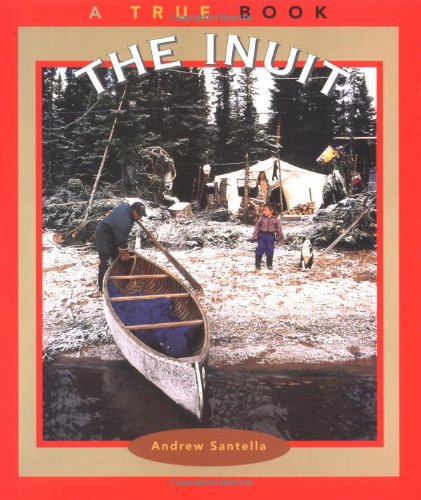
The first was The Inuit by Andrew Santella. This book was ideal for my 7-year-old son to read on his own. SA(7) loves facts, and delights in reading nonfiction books and telling me all about them afterwards. Sometimes he holds it in until something triggers him weeks later, and then all kinds of knowledge comes pouring out (often in the very words of the book he read all those weeks ago.). Narration can be a very natural thing, and I am always delighted to hear what he has learned on his own.

I notice on Andrew Santella's website that he has written many nonfiction books for children. Many are on topics of United States history, but in this case this book was good for Canadian history as well. My library also has books he wrote on Jacques Cartier and Sieur de La Salle, and I will be checking them out soon.


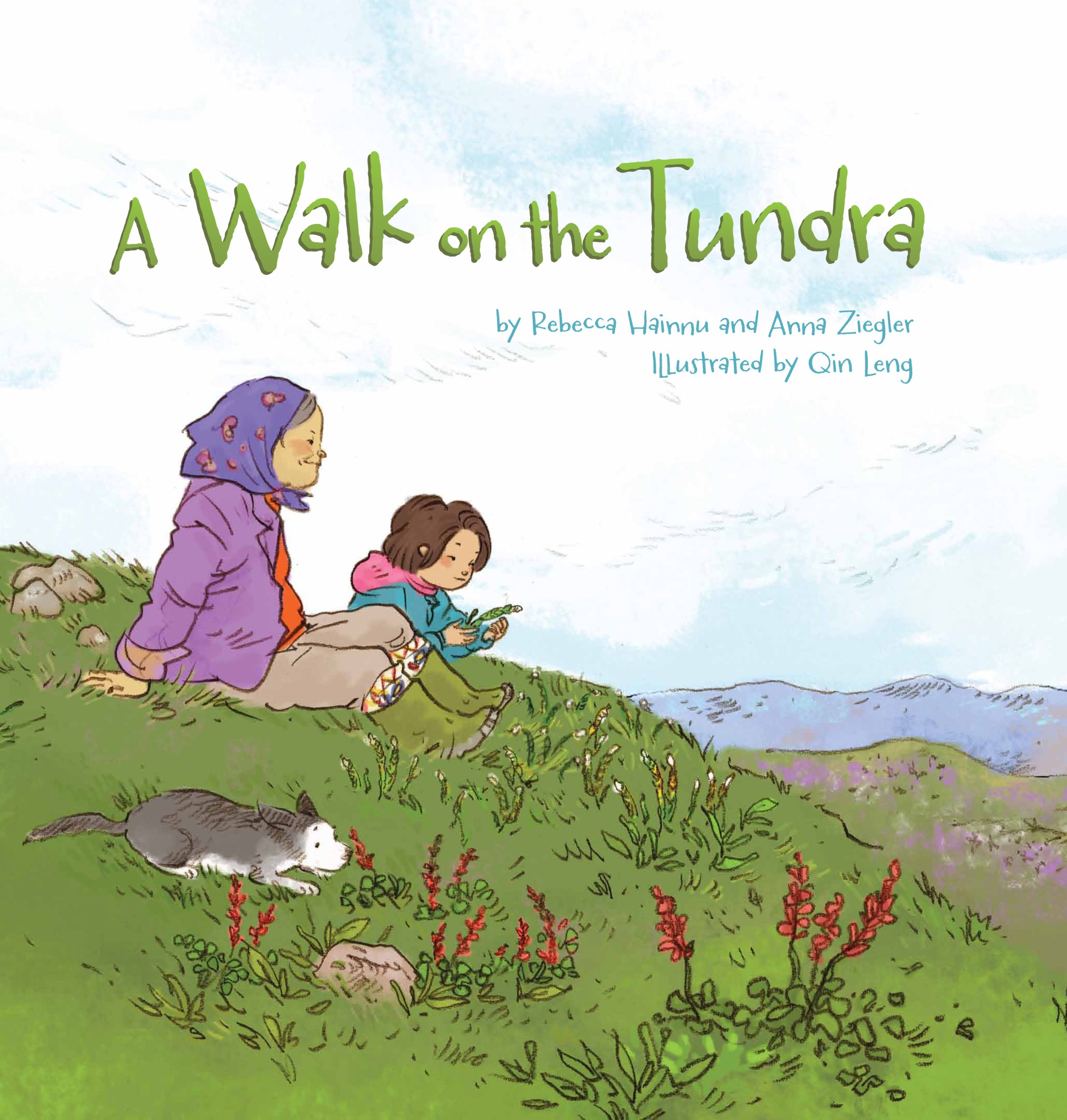
A Walk on the Tundra by Rebecca Hainnu and Anna Ziegler is a delightful picture book that highlights many plants of the Arctic and how the Inuit use them. Inuujaq, a young girl, takes a walk with her grandmother on the Arctic tundra to find Qijuktaat (Arctic White Heather) for her cooking fire. On the way, they discover many other plants for food, medicine, tea, and other uses.

The illustrations by Qin Leng show the beauty of an Arctic summer and give a small glimpse into Inuit life today.

A smart reader would have noticed the glossary at the back with pronunciations for the many Inuktitut words in this book. I stumbled through on my own the first time and it wasn't easy.

There is also a plant glossary with photographs. We were especially delighted with a small connection of our own. Soon after we first read this book, we discovered our very own edible plant beside our house: Yellow Wood Sorrel. I don't think it is from the same family as the Mountain Sorrel in the book, but it also has a sweet/tangy taste and heart-shaped leaves.

Two other books suitable for children a bit older than my 7-year-old were Life in the Far North by Bobbie Kalman and Rebecca Sjonger and The Inuit Thought of It: Amazing Arctic Innovations by Alootook Ipellie and David MacDonald. I would not call either of them "living books"...they are too fact-based and fragmented for that. Still, they are fascinating resources for a child who has an interest in this topic.

Finally, I must mention a wonderful living book I stumbled across for adults (or high school students) who are interested in the Arctic. A Schoolteacher in Old Alaska: The Story of Hannah Breece is a memoir (edited and expanded on by her great-niece Jane Jacobs) of a middle-aged woman who went to Alaska in 1904 to teach native children. While this is properly American, not Canadian, history, I would like to revisit this book when my children are high school age, whether as a family read-aloud at that time, or as a school book (depending on their interest).