Showing posts with label Nature Study. Show all posts

Sunday, November 13, 2016

Living & Learning Update #4: Flat Stanley, Shoeboxes, Scheduling App

Living

SA(8) had a cousin from Saskatchewan send him a Flat Stanley. On Tuesday we went out and took a couple of pictures at Peake's Quay (where the Fathers of Confederation landed) and Province House (where the Fathers of Confederation met and Canada was born.). The tiny figure on the step is SA, holding Flat Stanley.


Yesterday SA(8), JJ(6), niece I(9) and I went to the Operation Christmas Child packing party at our church. In the last few years we've just packed our own boxes, but the party was great fun! 82 boxes were packed in just over an hour.


Learning

This week was much nicer weather than last for our #FallOutside2016 nature challenge! We are trying to get outside every day for at least 15 minutes this month. This week started out gorgeous. On Wednesday we even had lessons outside because it was so warm... it actually went up to 13 degrees (about 55 Farenheit)! We stayed outside almost all day that day. We didn't get all the schoolwork done, but it will probably be June before it's that nice again and we wanted to enjoy it.


MM(4) has been very earnest lately about trying things on the piano. He looks very carefully at his brother's piano book and tries to figure it out with his fingers on the keys. Afterwards he comes to me and asks if I heard him playing.


In other news, I have discovered a lovely app for my iPhone called 30/30. It seems perfect for scheduling Charlotte Mason-style short lessons. I put in my "Daily List" of lessons we do together as a family. For each item on the list I can add a specific period of time. When the timer rings, our lesson is over and it goes on to the next item (I have it pause at that point until we're set to go with our next lesson.) So far it has worked really well to keep us on track. Because that list is quite similar for us every day, I just make minor adjustments to the list each evening. This may even end up replacing my paper and pen daily checklist!

I have lists for each child for the work they do separately as well. That works a little less well because they work at different things at the same time. (SA does copywork while I read to JJ, for example). I may figure out how to make it work yet, though.

Has anyone else tried this app for homeschooling to-do lists?


Reading

In light reading, I read Ruth Reichl's Garlic and Sapphires this week. I loved it. She was the New York Times restaurant critic for a while and this book is about her various disguises as she did that.

In slightly heavier reading, I started Kathleen Norris' Acedia & Me. It seems very promising. I read her Amazing Grace earlier this year and found it very thought provoking and worth reading, though I come from a very different background and disagree with some foundational things she seems to take for granted.

With the boys I started Caddie Woodlawn for their bedtime reading.


Sunday, November 6, 2016

Living & Learning Update # 3: Origami, Fall Outside Nature Challenge


Origami

I have been greeted by this sight every morning for the last several weeks. SA(8) and JJ(6) are obsessed with origami. Earlier this fall at a yard sale I found what I thought was a package of origami paper for a dollar. This origami paper turned out to have folding instructions on the back of each page. The boys have been making their own square "origami paper" by cutting printer paper, and have been making many of the designs.

I am amazed at how skilled they have become. We did origami as our "handicraft" last year at some point, and it was very difficult for them at first. Now they are doing quite complex folds, making paper tulips and elephants and cranes. They have definitely left me behind! (This is making me feel better about myself, since I am failing to teach them a handicraft this term.) I must say, though, that the mess they create is terrible, especially since their instructions are loose-leaf and not in a book.


Fall Outside 2016 Nature Challenge
This "adventure" is put on by Dawn from Mud Puddles to Meteors. The challenge is to get outside in nature for 15 minutes every day of  this month. November can be so cold and grey (and it was, this week!)! I knew I needed the kick in the pants to get the children out every day. There was quite a bit of foot-dragging at the beginning of the week, but by the end the boys were getting used to the cold again and enjoying being out in nature. On Thursday we lit a little bonfire, and that was a huge hit. They stayed out for a couple of hours that day.

 We are also doing some little drawings on a calendar to chronicle our month with nature. I love MM(4)'s poplar leaf!

Reading
Here is my youngest book lover AJ "reading" The Gingerbread Man. His favourite book, though, is One Summer Day by Kim Lewis. It has a little boy of about his size who, like him, plays peekaboo, and likes to get his shoes and coat on to go outside.


In other reading news, I finished reading William Steig's Newberry Honor book Abel's Island aloud to the bigger boys. They loved it, and the pictures really enhanced the story for them. I enjoyed it, but I did find Abel a bit eccentric at times, and the story ended rather abruptly. William Steig is an interesting author. I don't like all of his children's books, and I don't find his art all that charming (children like it, though), but he has a few books I absolutely love. Amos and Boris definitely goes into my top 10 picture books of all time. Another one I love is called Yellow & Pink, which is a quirky parable about intelligent design.

In my own reading, I am almost through Elizabeth Goudge's Scent of Water. I am enjoying it, but not as much as I had hoped. My expectations were too high, and the deficiency is in myself. I can only explain the problem in MBTI terms. I am not "iNtuitive" enough for this book. As an ISFJ, I have put some thought into how I interact with other types. The "N" types are the ones most likely to mystify me. As in this case, this is usually in a good way (I stand in awe of the way someone sees the world and communicates about it.), but sometimes it is in a not so good way (I am completely mystified by the way someone thinks...they seem to be ungrounded in reality.) I think Elizabeth Goudge is an "NF" type. Her writing is very evocative. She does put a lot of sensory detail in her novels, but it is all about the feeling her description creates in you. Any attempt to recreate the scene (whether in a movie or in real life) would be disappointing, because it's not about the details, it's about the atmosphere. Does that make sense? Any other "S" types out there that get what I'm saying here, or does this sound crazy to you? The feelings I get as I read are lovely but nebulous, and they drift away from me. The truth that comes through sometimes in this novel is beautiful but almost always startling to me, as it seems to burst forth out of almost nothing (there is no logic, no natural progression to it). I'm not at all saying I didn't like the book, just that I didn't feel quite at home in it.

I should say that I think most of the best novel writers are "N" types, and very few of them make me feel like outsiders in the worlds they create. Marilyn Robinson is another very strongly intuitive type, and I think her books are wonderful. I am not like her Lila, but I love her and stand in awe. Even L.M. Montgomery, who speaks so much of kindred spirits, does not make me feel as though I am not one. (After all, she lets Diana Barry be one, and Diana does not "get" Anne all the time either.) Elizabeth Goudge creates a sympathetic world between her intuitive type kindred spirits --Mary, Edith, Paul-- and the ordinary people really don't matter all that much in her world. Perhaps this is why Goudge is so very loved...all the "N" type readers feel like the characters are kindred spirits, and her way of thinking and imagining feels like home.

So end my jumbled musings...

Thursday, October 15, 2015

Apple Picking at MacPhee's Orchard

This week we did something the boys look forward to every year: apple picking at MacPhee's Orchard. Five of their twenty varieties were ripe, and we chose to pick Spartans and Nova Spies. Sadly, my favourite JonaGolds were not quite ripe yet. I'm not sure yet if we'll manage to come back for them when they're ready... the orchard is about 40 minutes away from our place.

The orchard is a peaceful, quiet place with thousands of small trees. Children can easily pick apples all by themselves. We met several families from our local homeschool co-op there and got to work. SA(7) carefully read the information sheet telling us about all the varieties of apples...their taste, texture, and other defining characteristics. MM(3) pulled the wagon around. As usual, JJ(5) was my most faithful worker.

As we were paying for our apples (only .70/lb!), the boys caught sight of the maple syrup they were also selling. The boys wanted some, but I held them off ...maple syrup is expensive! Finally I decided they could buy some --if they went and bought it themselves (learning experience = added value, to me). 

I gave SA(7) the money, and told JJ(5) to go with him and ask for a small bottle. They started off to the tiny store, but before they got there, JJ came back. "I'm shy, Mama," he said.
"I know," I said. "You just go along with SA. He's not shy."
They got to the little store, but didn't go in. All three of them (by this time MM had decided he wanted to be in on it, too) hung around the door and peeked in. This time SA came back.
"I've never done bought something without you before, and I feel nervous about it," said he.
"Well," I said firmly, "If you boys don't buy it, we're not going to have it."
So they went back again. At the door, they peeked in and looked back at me. "Go on," I encouraged.
They went in. Five seconds later, JJ came tearing out with the maple syrup, and SA came out more slowly with the change.
"Did he give you the correct change?" I asked. 
"Yes," he said.
JJ was dancing with excitement. "He gave me the maple syrup, and he gave SA the money!"
"Did you do it the way I told you?" I asked them.
"Not exactly," said SA, "I didn't ask for a small bottle, I asked for a 500 millilitre bottle, because that's how much the small bottles hold."

So we went home and had apple pancakes and maple syrup for lunch.

Monday, September 28, 2015

Supermoon Eclipse

The Supermoon Eclipse last night as seen from PEI, Canada. Picture by my husband Stephen, who really, really wished he had a better camera in that moment. I think he did great with what he had!


When I look at your heavens, the work of your fingers,
    the moon and the stars, which you have set in place,
 what is man that you are mindful of him,
and the son of man that you care for him?

Saturday, September 5, 2015

Nature Journaling for the Intimidated: The Simple List

Here's an idea.

Get your children's shoes on and take them all into the back yard. Grab a notebook and pen on the way out. Then, start making a list of the things you see. Are there trees? Birds? Flowers? Clouds? Bugs? In a minute, your children will be running around, calling you to see the Queen Anne's Lace all closed up and gone to seed, bringing you yarrow and hawkweed, finding a deserted funnel web in the grass. Write it all down in a list. Add date, time, and weather. Decorate if you want.


A nature journal does not have to be complicated. It does not have to be perfect. In fact, as I've begun to do it more and more, I've found that the process is more important than the product. It's in the process that you realize how little you know, that you begin to notice and compare details, that you begin to gain skill in capturing what you see, hear, touch, and smell. A nature journal is a record of a learning process.

Anyone can make a list. One list every month can be a valuable record as you notice the changes from month to month. (So many flowers have gone to seed since last month!) A list could be a first step to recognizing what you want to learn more about. (What is that small aster-like flower with white petals and tiny purple flowers in the center?) A list requires no artistic skills. If you keep making lists like this, though, you may find yourself recording --and illustrating-- details of things you want to find out more about.

Keeping a nature journal does not have to be any more complicated than this. If it grows into more, well, you can take that as it comes! You do not have to start out knowing how to draw, or paint with watercolours, or knowing the names of everything you see. Start where you are. Make a list. Discover things to wonder at, things to find out more about. That's all you need to get started.

The joy you find as a parent in nature study and nature journalling will be naturally contagious to your children. I'll be honest, SA(7) still does not enjoy writing or drawing, as that's a natural weak area for him. But I've noticed that when he has gotten out his nature journal, it has been because I was making an entry in my own. All the children enjoyed helping me make this entry in my nature journal. They not only found things for me to add to my list, but they described some of them in great detail. This makes me happy, and I know it has great benefits for them, too.

Don't be intimidated by nature journaling. Make a list!

Tuesday, August 18, 2015

Spider Citizen Science

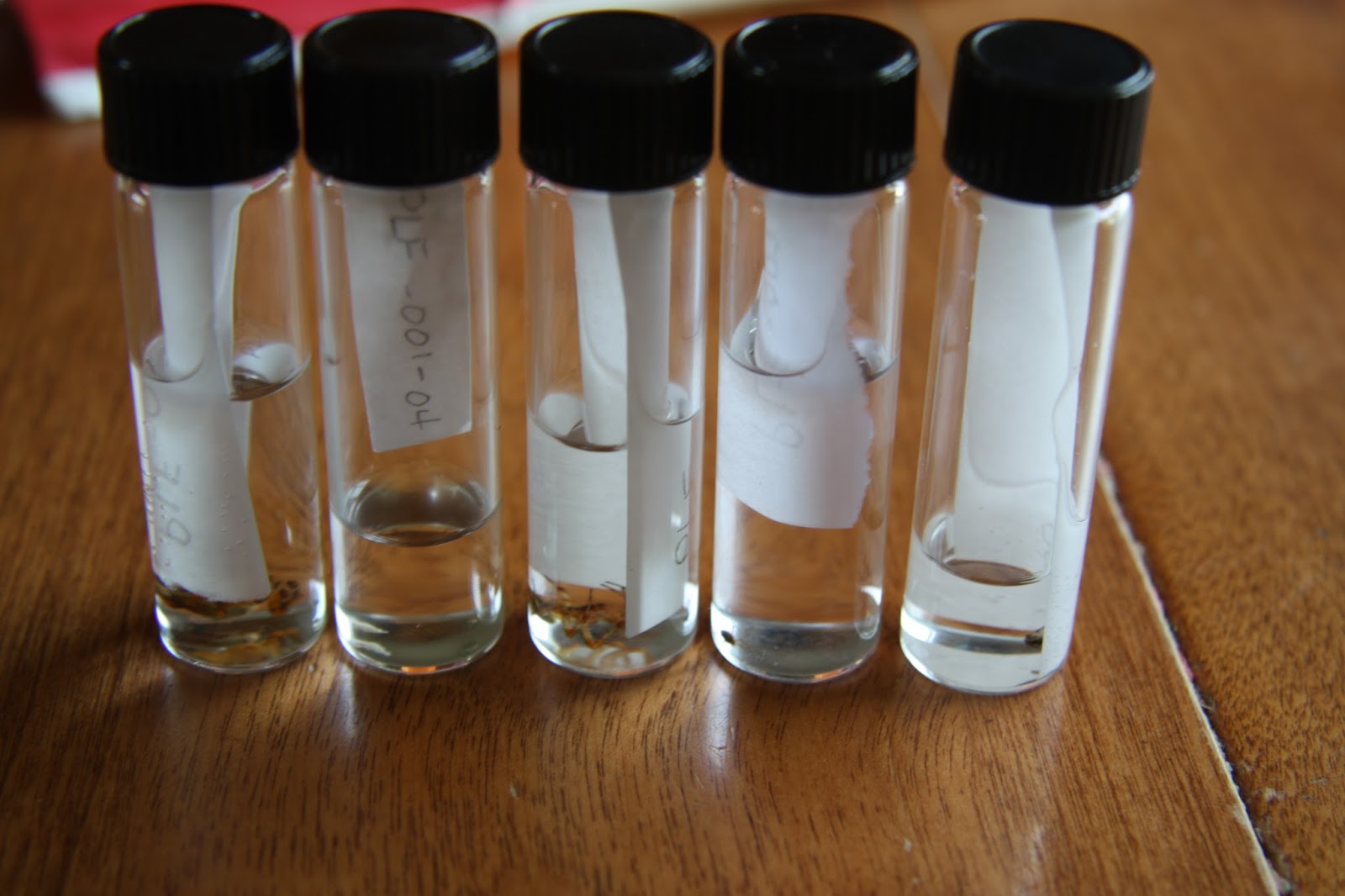
I was listening to the radio a couple of weeks ago and heard that Nature PEI was looking for citizen scientists to collect spiders. Apparently PEI only has 38 known species of spiders, not because that is the real number of species we have, but because no one has ever bothered to count them. Nova Scotia has 437 known species, New Brunswick has 382, so it stands to reason that PEI must have more than 38.
I took three of my boys along to an informative workshop (including a nature walk with some hands-on spider catching practice!), and we've been collecting spiders. 

My favourite so far has been a Black and Yellow Argiope (sorry no picture, but you can see one here) of impressive size. I noticed its web first, an orb web with a zig-zag "zipper" down the center. I watched the web for a while, hoping to see the spider. After some time, I noticed it in the grass below the web and caught it.


Nature PEI has provided us with everything we need to collect the spiders, including a large canvas bug net. The boys love "sweeping" for spiders, shaking grasses and bushes, then bringing them all back to me to capture in our little vials. Of course, they catch many other interesting bugs as well as they do this.

I love citizen science! Have you had opportunities for citizen science? Would you go for spiders?

(19/8/15 Edited to add this picture of another Black and Yellow Argiope that my husband saw and photographed a couple of years ago, also on PEI. This one was much larger than the one I caught, about the size of his thumb, he said. Also, since I published this post, I have discovered that this spider is not one of the 38 known spiders on PEI, so we have made a scientific discovery here, folks! lol.)


Saturday, August 1, 2015

Saturday Catch-All: First Week, Dudamel, Nature Journal Share

First Week
We just finished the first week of our new school year. Why so early, you ask? Two reasons: We had already had five relaxed weeks and needed to get back into routine, and starting early allows us to be a little more flexible about taking a day off here or there if necessary. We are already planning on a two-week break at the end of August/beginning of September as Stephen takes his vacation then. SA(7) started Year Two using Ambleside Online, and JJ(5) started his "Kindergarten" year. This basically means that I have started reading lessons with him, while he continues to participate in our family outdoor time, reading aloud time, poetry tea time, math activities, etc.

Anyway, I am exhausted today. Homeschooling requires intense interaction with my children, and I had gotten used to less of that during our vacation. As an introvert, all this interaction drains me. I know from last year, though, that I will adjust over time and come up with coping mechanisms to deal with it. And I do love homeschooling with a passion that still surprises me despite this small drawback in my own personality.

The rewards appear daily when I least expect them...
-the twinkle in SA's eye as he's about to narrate something that amused him.
-the effortless use of a big word that he just heard for the first time in reading a week ago.
-the creative engineering of paper airplanes to make them fly better (a collaborative effort between the oldest two).
-JJ's excitement in the discovery of addition facts using Cuisenaire rods.
-the enthusiasm with which all three of them run around gathering fistfuls of flowers for me to draw in my nature journal as I sit peacefully in the grass with the baby.

This is what I will remember, and it is what I choose to think about after the exhausting jumble of chores and schoolwork, discipline challenges and moments of joy, happy lessons and lessons that meet with resistance.
Rejoice in the Lord always; again I will say, rejoice. Let your reasonableness be known to everyone. The Lord is at hand; do not be anxious about anything, but in everything by prayer and supplication with thanksgiving let your requests be made known to God. And the peace of God, which surpasses all understanding, will guard your hearts and your minds in Christ Jesus.
Finally, brothers, whatever is true, whatever is honorable, whatever is just, whatever is pure, whatever is lovely, whatever is commendable, if there is any excellence, if there is anything worthy of praise, think about these things. What you have learned and received and heard and seen in me—practice these things, and the God of peace will be with you.
(Philippians 4:4-8)

Introducing Dudamel 
Our composer this term is Johannes Brahms, and this week's listening was "Variations on a Theme by Haydn." Our music appreciation lesson is very simple. On Thursday morning at teatime, we get our snacks and go watch the piece on YouTube.  Yes, that's all we do. One of my favourite things about watching music on YouTube is that you can often watch the conductor. I love watching conductors! This week's conductor was Gustavo Dudamel. I was immediately struck by his air of calm joyfulness. Curious, I later looked up more videos with him conducting and was amused to see a huge difference in style between his older and younger self, though still the same friendliness and joy (see especially around the 4 1/2 minute mark in that second link). Finally, I looked up his website, and found a fascinating character. Do check it out! You can also find a few interviews on YouTube as well.

Nature Journal Share
If you enjoy nature study, you may like the Mud Puddles to Meteors blog. They also have an active Facebook group, a great place to share your nature walk finds with an appreciative audience! One fun thing Dawn just started there is the Nature Journal Share. She invites anyone in the group to post their nature journal entries on Saturdays with the tag #naturejournalshare. I anticipate that this will be an inspiring event every week. I am not a natural artist, and have been slow to get into the habit of nature journaling, though we love our nature walks here.

My share this week is a small weed...we have so many weeds I don't know the name of! I suspected that this one would have some relation to chamomile because that's what it smelled like to me. Sure enough, it's known as rayless chamomile, or wild chamomile. I think one of its other names, "pineappleweed," will stick with us, though.

And that's all for this week!

Saturday, July 4, 2015

Saturday Catch-All: Nurture By Nature, Polyphemus Moth

There have been quite a few things over the last little while that I've thought, "I really should write about that!" And then busyness (and quite possibly perfectionism) gets in the way, and the things pile up.

Nurture By Nature
Nurture by Nature by Paul Tieger and Barbara Barron-Tieger applies Myers Briggs personality typing to children. Brandy Vencel at Afterthoughts recommended this book back in January, and I borrowed it at our library. She has already written an excellent review, including advice on how to use it, so I will refer you to that and not add too much here. 

One of the most valuable things I gained from this book was a deeper understanding of the personalities of my children who are the most unlike me. Their strengths and weaknesses are so different from mine that I tend to see their weaknesses as greater than they are and at the same time not appreciate their strengths as I should. I understand my oldest child quite well. While he does not have the same personality type as I do, he is very similar to me in many ways. (He's a textbook ISTJ, I'm ISFJ.) However, I know I'm going to have to refer to this book again as my third child (probably ESFP) grows older, as he is so very different from me.

It has been interesting to try to consider this information from a Christian perspective (The parenting advice in the book itself is very secular.). If a child is born with a certain personality and keeps that same personality throughout his life, it is reasonable to assume that that personality is God-given (however difficult the personality may seem from our perspective!), and more, reflects the image of God. Of course, our fallenness plays into this too.

This book has sparked so many ideas and questions in me. How are our spiritual gifts related to our personalities? How can we accept and respect a child's basic personality while still working to overcome weaknesses? I also considered how so many other concepts are included in personality types, particularly "love languages" and learning styles. I found this book well worth reading (despite disagreeing with some of the parenting advice in it), and will be reading it again in a couple of years.

Nature Study
What happens when you pick bugs for your nature study focus?

Amazing bugs come to you, that's what. A beautiful Polyphemus Moth was on our screen all day today. Its wingspan was five inches (125 mm), quite an unusual size for a moth around here.

We also saw a viceroy butterfly this week, and another moth I haven't identified yet.


HEMS Conference
It has been almost a month since I went over to Nova Scotia for the homeschooling conference there. I went with several ladies from PEI, and we had a wonderful time. I've been wanting to do the conference justice with a real post, but since that hasn't happened yet, I think I'm going to mention it here and let it go. Sonya Shafer from Simply Charlotte Mason was the main speaker at the conference. She is a very engaging speaker, much better in real life than I had expected from seeing her videos. I especially appreciated how she incorporated demonstrations of several of Charlotte Mason's methods into her talks: picture study, narration, copywork, studied dictation. 

The most important insight I came away with from her talks was something I already thought I knew. Education is an atmosphere, a discipline, a life. Simple, right? But as Sonya Shafer introduced these concepts once again, I realized that I had been focusing more and more on "life," and less and less on "atmosphere" and "discipline" in our first year of homeschooling. It's time for me to adjust a little once again. 

If you ever have a chance to go hear Sonya Shafer speak, do so. It will be worth it, I promise you! 


Wednesday, June 24, 2015

Choosing our Summer Nature Study Focus

I didn't have a choice, really. I may have had visions of documenting our local wildflowers in our nature journals this summer, but matters have been taken out of my hands.

I picked up a book called Bug Wise a couple of years ago, and SA(6) has been reading it voraciously this last month. He has also been spontaneously narrating every detail. He is particularly interested in spiders and their webs right now. I had a brief moment when I considered formalizing this amazing learning. "Let's make this a school book!" I thought. "Let's start at the beginning and narrate all of it!" (I know! Sometimes I can be crazy like that.) Thankfully I stopped myself. As it is, I think I've heard the whole book anyway, and the spider parts several times.

After a rainy day yesterday, the boys were especially eager to get outside today. I took their watermelon snack outside to them, and they pointed out three tiny yellow spiders to me. They were almost too small to see, though they had each spun a web.  I suggested the boys get a magnifying glass. We watched them for a while, and then I looked them up. They turned out to be baby European garden spiders (araneaus diadematus), a very common orb weaver.

Armed with the magnifying glass, the boys were soon looking at every insect they could find. SA(6) trapped an ant under the magnifying glass. JJ(4) also checked out the ants on the peonies (They are always abundant there.)
"In elementary grades, nature-study deals with objects which the children can see with the naked eye. However, a lens is a help in almost all of this work because it is such a joy to the child to gaze at the wonders it reveals." -Handbook of Nature Study, p.9


Then someone saw a ladybug, and there was a scrambling to find out how many spots this one had. It was on a hand and an arm for a while, but they figured it was looking for aphids. Since there were none on their arms, they decided to put the ladybug back on the plant.


Meanwhile, MM(2) was interested in the blackflies flocking to our watermelon rinds. Sadly, they all flew away when I was trying to take their picture. AJ was well-protected in his chair, but still managed to get two blackfly bites on his face. :(

I went to work doing some outdoor chores and noticed some spiderwebs in the grass. I called SA to give me his expert opinion, and he came, spouting information about different forms of spiderwebs all the way.

And that, friends, is how I chose our summer nature study focus. Sometimes I have to think and decide purposefully, but sometimes it just happens and we run with it.

Thursday, June 18, 2015

A Bit of Serendipity

On Tuesday, SA(6) and I read about the "Yellow Flicker" (Yellow-shafted Northern Flicker) in the Burgess Bird Book. It was one of our last narrations for his grade one school year.

On Wednesday, we saw a bird in the backyard. "It can't be," I thought. But it was! We had never seen one of these in our backyard before.


What's a woodpecker doing on the ground? The northern flicker likes ants and beetles, and often drills into the ground for them and their larvae in the same way other woodpeckers drill into trees.

Saturday, November 15, 2014

Review: Creative Nature Study

Nature study took a bit of a back seat in our last term. We went on a few nature walks, spent time outside, and identified a few new birds at our feeder, but that was as far as it went. Nothing new was recorded into our nature journals, and we collected no autumn leaves. I know it's time to be more intentional about it again, and so I was delighted to have the opportunity to review Creative Nature Study, a book published by The Old Schoolhouse Magazine.

The subtitle promises "Ideas to Jump-Start or Invigorate Nature Study in Your Homeschool," and that is what it delivers. It has chapters on how to begin with nature study, ideas for nature walks, projects, nature notebooks, and scavenger hunts. Each chapter is compiled of short articles by several Christian homeschooling moms. In many ways, reading this book was like sitting down with a group of experienced homeschoolers and sharing practical ideas, solutions to challenges, and inspiration from their successes. At the end of the book there is an appendix listing all the resources mentioned, and another appendix with notebooking pages for nature scavenger hunts.

I have to be honest, when I opened the book, I expected more of a Charlotte Mason style nature study focus (this is what I'm most familiar with, after all!). But I appreciated the broadness of perspective offered by moms with a wide variety of educational styles. In the end, there were plenty of ideas for me, the CM homeschooler, as well as for homeschoolers with a more eclectic approach. I especially appreciated Danielle Dobrosky-Tolar's words in the introduction:
“We wanted our kids to have something  different, something better, something more. We wanted them to look outside the window and lose their train of thought by watching a hummingbird darting at the feeder. We put down our textbooks and prayed they would be beside themselves with awe while watching a bunch of slippery tadpoles turn into leaping frogs right before their eyes. We dared to turn off the TV, go “unplugged,” and heartily hoped they would see the miracle, the poetry, in a caterpillar becoming a butterfly.” (p. 5)
I think this is what we all want, regardless of homeschooling style. We want our children to care.

And so I happily gleaned several ideas that will work for me, and cheerfully passed by the ones that don't fit in with my homeschooling style. Cindy West had a wonderful list of items to include in a "nature bag," a bag kept ready to go whenever you go on a nature walk. Candace Crabtree had some great suggestions for a "bird watching center" that I fully plan on implementing as we are forced to spend more time indoors this winter with our new baby on the way. Andrea Hahn had a very helpful article on keeping a special nature journal called a "perpetual calendar" that will allow us to compare weather, wildlife, and other "firsts" from year to year.

Even though I understand that this book's idea sharing format is not meant to be exhaustive, I was a little disappointed that some of my favourite resources were not mentioned. There were several articles about birds and birdwatching, yet no one referred to The Cornell Lab of Ornithology's wonderful bird identification website or even their Great Backyard Bird Count. Indeed, as far as I could see, there were no allusions to any citizen science projects. Also, the Handbook of Nature Study website and its Outdoor Hour Challenge were not mentioned, though it is a go-to resource for many homeschoolers (Comstock's classic Handbook of Nature Study itself was included, though.). I would also have liked to see the resources in the appendix arranged topically rather than alphabetically for easier browsing.

Over all, though, I really enjoyed Creative Nature Study. It is an encouraging, inspiring book of ideas, and you will be sure to find something to implement in your own nature studies, no matter what your homeschooling style. I fully intend to read this again in half a year. A different season will be sure to make different ideas jump out at me and inspire me all over again. Thanks to the Schoolhouse Review Crew for the opportunity to review this book.


Friday, October 24, 2014

Nature Walk Photo Dump

Mooney's Pond, PEI
October 23, 2014


Thursday, August 14, 2014

Evening Primrose Nature Study Joy!

If you have evening primroses in your backyard and you haven't watched them bloom, you must do it some day! 

I was excited when I saw the Evening Primrose Outdoor Hour Challenge in my inbox last week, because I had just spent some time drawing one in my nature journal the day before. They are fairly plentiful in our back yard, and grow to between four and five feet tall. The boys and I picked some for our teatime flower arrangement, and noticed how fragrant they are.

During the day, we often see tiny insects inside the flower, and bumblebees flying into one, then another, pollinating them. I believe their normal pollination is done at night by moths, though we've never had a chance to see that happen.

From the Handbook of Nature Study, we discovered that evening primroses bloom very quickly in the evening. I went out to watch earlier this week and discovered that the time frame here was between 8:30 and 9:00. Since that's after bedtime for my little boys, watching the flowers open was an observation that had to wait for a special occasion. The boys and I finally went out together yesterday evening. We looked at all the plants and finally settled on one that had several buds that looked like they were about to bloom. Then we settled down to watch and wait. Within about ten minutes, we noticed one of the buds beginning to open. As the petals pushed against the sepals, the sepals suddenly let go one at a time, and curled back towards the stem. After that, the petals continued to unfurl until the flower was completely open. The whole process probably took about five minutes. Meanwhile, another flower had begun to open as well, so we got to watch two of them!


I think this was one of our favourite nature study experiences so far. It was so exciting to be able to watch a flower open before our eyes.

I will be sharing this post with the Outdoor Hour Challenge Blog Carnival.


Tuesday, August 12, 2014

The Great Caterpillar Escape

In our house, we have a jar with two caterpillars in it. Every so often, I remind the boys to add fresh leaves so their captives stay alive.

A couple of days ago, though, I noticed that the caterpillars seemed to be missing, and I wasn't sure what happened to them or who the culprit was.

Thankfully, however, I discovered that the culprit who orchestrated their escape had documented it very carefully on my cellphone camera.

Notice the jar, carefully turned on its side.


And now, an artistic closeup of the caterpillar's getaway.

What adventures!


Oops...accidental partial selfie of the culprit. We only have one boy this blonde.We know you did it, JJ.


And finally, on the floor. I'm not sure if he had a little help or not...


In case you're wondering, we did come across him again a day or two later and put him back in the jar. The other caterpillar is still missing.