Showing posts with label Reading. Show all posts

Thursday, October 4, 2018

Book Man

Last night just before lights out JJ(8) said to me, "I don't know what to read next."
Of course, that's just the right sort of thing to say to a mama like me.
I started to pull books off the shelf: The Moffats, Rascal, The Prince and the Pauper...

"I've been thinking I might like to read Sherlock Holmes," he said timidly.
"Of course you can. You may read any of the books on these shelves, you know," I replied.
He started to get excited.

This morning he kept finding more books he thought he might like: The Indian in the Cupboard, Hans Brinker, Peter Pan. 

He added in some books he wanted to re-read: Robinson Crusoe, The Phantom Tollbooth, Seven-Day Magic.

He sorted the books, now numbering about twenty, into two piles: the thick books and the thinner books.

I started envisioning these books scattered all over the house. This worried me a little, but I didn't want to squash that enthusiasm. "You could pick four or five for now, then pick more when you finish them?" 

This suggestion did not meet with his approval.

He did take out a couple of books that he thought he might not want to read right now after all: Mr. Popper's Penguins; Hey World, Here I Am!

Then he asked me for a basket like the one I have for my current reads. Of course, I found him one. He now has a leather stool with storage space for all those books.

He pulled the seat in front of the couch and demonstrated how he can sit on the couch, reach over and open the stool, pull out a book, close it, and use it for a foot rest as he relaxes and reads.

I heard him talking confidentially to his younger brother this evening as he went up to bed:
"Hey MM, I'm a book man."

Tuesday, January 20, 2015

Reading Scripture with your Young Readers

SA(6) and I began to read Proverbs together at the beginning of Grade 1. He had been reading for about half a year at that point, and had just received his own Bible. I decided we would try to read a short passage every day after lunch, where he would read one verse, and I would read the next.

I should perhaps mention that we have a habit of reading Scripture aloud after meals anyway, whether I or my husband do so, or whether SA reads along with us. So this new habit was actually not a huge innovation on our part.

Still, it was a challenge, and we did not really begin to do it steadily every day until the beginning of the second term of Grade 1. For one thing, the vocabulary of Proverbs is really challenging. For another thing (and this is probably more to the point), any new habit requires committed, daily effort. I do have the blessing of a son who, once he makes a habit his own, never deviates from it. You could even call him a bit inflexible sometimes. However, in this case it has been a blessing. :)

As we've really gotten into the routine of this, I'm enjoying it more and more. I'm sure a case could be made for beginning with an easier Bible translation with young readers. We've chosen to simply use the version we normally use as a family and plan to keep using throughout our children's growing up years. (ESV) We do this to build our children's familiarity with the language of Scripture over time. Switching versions as they grow could take away from that.

Beginning with Proverbs was a personal decision, and not really one I put a lot of thought into. However, it has proven to be a good choice. The best thing about it is the repetition of words. While the vocabulary may be difficult, once a child has mastered a few big words, the same words keep coming up. (Righteousness, instruction, knowledge, reproof, prudence, integrity, understanding, discretion...) There is also a lot of repetition of ideas. Comprehension may or may not be complete at this point, but it would be hard for him not to get the idea that wisdom is good and foolishness is bad, that hard work is good and laziness is bad, that listening to instruction is wise and despising it is foolish.

We are now working through Proverbs 18. It takes us about three reading sessions to get through a chapter now. It took many more than that in the beginning, but there was no rush. I do not make him "sound out" big words when we're doing this. If he's struggling, I simply supply the word and we move on. I still help him quite often, but I notice that he usually reads a word effortlessly the second or third time he encounters it.

I don't know where we'll go once we're done Proverbs, though I am leaning towards the Psalms. I anticipate that as our children grow, we'll simply incorporate each new reader into our routine until we're all taking turns reading verses aloud. I have a distinct memory from my childhood of reading like this with my family...my father, my mother, myself, and two younger siblings. The youngest reader at the time was about five years old. It is a good memory. I'd like to pass it on to my children, and perhaps to you and yours as well.

Friday, December 5, 2014

Another Step on the Reading Road

I was reading Who is Coming to Our House? yesterday as part of our picture book Advent calendar, and I remembered that last year, this was one of the first whole books that SA(6) read. It went on his "I Can Read it All By Myself" chart on the wall. We counted the books he read up to 70, and then we gave him a Bible of his own.

Since then, he has read many, many books. He read all the Arnold Lobel books our library had, and then he read all of Cynthia Rylant's Henry and Mudge books they had. We buddy read from Proverbs (in his own Bible, of course!).

Up until recently, all of his reading has been out loud, and with me listening. He would find an interesting library book, and he would ask me, "Can I read this, Mama?" Of course, I would always say yes. Then he would sit down near me and start reading it to me. Sometimes I would challenge him with a book that had smaller print and more words, and he would balk. Then I would offer to read every second page, and that usually was okay with him.

Now, a little less than a year after he really started reading, he has begun to peruse books quietly, on his own. I don't know if he is reading every word, or if he is selectively finding things that interest him. It doesn't really matter to me. It makes me happy to see him sprawled in a chair for half an hour at a time with a book that it would intimidate him to read aloud.

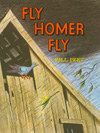
Yesterday, it was Bill Peet's Fly, Homer, Fly. I will always love Bill Peet for his illustrations that made his story so irresistible that this child could not help but read at least some of it for himself.

I still don't know how much of the books he is actually reading and absorbing so quietly all by himself. Every once in a while he surprises me with a piece of information that I know came from one of the books he was looking at. He loves non-fiction, and often will come back to a favourite book again and again.

Still, I don't feel a need to grill him and find out for sure how much he has read and understood. I think this is a natural stage which will grow until there is no doubt he is taking it all in.

Right now, my job is to keep the library basket full.


Other steps on SA's road to reading:
{The Three R's in Our Homeschool}: Reading
{Big Red Barn Reading Lessons}: Lesson 1 (additional lessons are linked at the bottom)
The Awesome Mystery of Growth in Reading
Some Favourite Books for Beginning Readers

Thursday, May 15, 2014

Books for Early Readers

Since SA's reading took off in January of this year, he has read sixty-three books, some of them more than once. I've already shared some of them here and here, but I'd just like to go through our chart and pick out some of his favourites for the record (and for you, if you're looking for early reading books!). It always amazes me how many mediocre books I have to wade through at the library to find a few good ones, even in the early reading section!

SA really enjoyed the "Puppy Sam" series from Kids Can Press, and read most of the titles in our library. I did not love them enough to consider buying them sometime in the future, but if your library carries them, they're worth adding to the line-up. We also read two "Pup and Hound" books from the same publisher, but did not enjoy them as much.


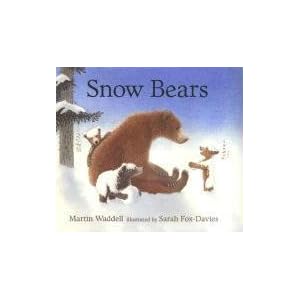
Books meant for little children can often be easy to read for early readers. Some of our favourites were Snow Bears by Martin Waddell, The Very Hungry Caterpillar and Brown Bear, Brown Bear, What do You See? by Eric Carle, and Bringing Down the Moon and This Way, Ruby! by Jonathan Emmett. Big Red Barn and Good Night Moon by Margaret Wise Brown were also good choices. Oliver Finds His Way was a favourite read-aloud when SA was little, and he enjoyed the chance to read it himself now.


Mouse Soup has already supplanted Emmett's Pig as SA's favourite book ever. I'm sure as he keeps reading he will continue to find more and more favourites. This one is now on my to-buy list. It is cute, and funny, and absolutely wonderful. SA felt compelled to read the whole thing to his father when he came home from work that day, just so he could enjoy it too. And it was written by Arnold Lobel, of "Frog and Toad" fame. The Frog and Toad books are also favourites with SA.


Two more series we have discovered recently are the "Little Bear" series by Else Minarik, and the "Henry and Mudge" series by Cynthia Rylant. SA has just read the first book of each of these, but since he liked them, we have more reserved at the library. Books by P.D. Eastman (Are You My Mother?) are fun as well.


Last, but certainly not least, is this great little book I found at Value Village one day. It is the only non-fiction title SA has read to date, but he really appreciated the factual information and pictures. It made me realize that I need to find more books of this type for him to read. It seems like most early reading books are stories.


Do you have some favourite books for early readers that you'd like to add to this list? Please comment! I'd especially be interested in any non-fiction title you've found worthwhile for early readers.

Thursday, April 24, 2014

April 2014 Favourite Read-Aloud Roundup

For several weeks in a row this month I didn't manage to get out to the library, so I don't have a lot of books to share today. However, the one I do have is absolutely wonderful, and it has gone onto my to-buy list.
http://us.macmillan.com/lassiecomehome-1/RosemaryWells

Eric Knight's Lassie Come-Home is rewritten by Rosemary Wells and beautifully illustrated by Susan Jeffers in this picture-book edition. My boys were enthralled by both the story and the pictures. They also loved the map at the beginning of the book that showed the route Lassie came back home. This was more of a heart-wrenching story than I have read to my little ones before (aged five and three), but they were okay with it (it does have a happy ending!). However, parents should use their discretion as to whether their children are ready for it or not. It may not be a good choice for a sensitive child.

My second choice this month is not one I read aloud, but one SA read and loved. He'd be reading along, then stop to look at me and grin (it's a very cute, gap-toothed grin right now...), then go on and do it again. I think this was his favourite book out of the forty-nine that he has read so far. JJ enjoyed listening as well, and asked me to read it to him again today. For you moms with early readers, this is classified as Level 2 in the I Can Read series.

http://www.amazon.com/Emmetts-Pig-Can-Read-Book/dp/0060597127/ref=sr_1_4?ie=UTF8&qid=1398380779&sr=8-4&keywords=emmett%27s+pig

Since I told you a while ago that I wasn't a big fan of Rosemary Wells' illustrations, both of the books I'm sharing today have some of her work. Lassie Come-Home was rewritten by her, and Emmett's Pig had the original illustrations by Garth Williams done over in watercolours by her as well. So. I do appreciate some of the things she has done. (Not to mention that I do enjoy the Max and Ruby stories as well...)


I'm sharing with Read-Aloud Thursday at Hope is the Word. Click through to see more great read-aloud recommendations.

http://www.hopeisthewordblog.com/2014/04/24/read-aloud-thursday-april-2014/

I'm also sharing with Book Sharing Monday at Life on a Canadian Island. (edit 28/04/14)

Thursday, February 20, 2014

Favourite Books for Beginning Readers

I have not shared any of our reading lessons lately. There's a reason for that: I'm taking a break. I know it might seem crazy, now that SA has actually taken off with reading. The thing is, I think reading real books is doing as much for his reading ability as my lessons were. Each new book has a combination of words he already can read confidently and new words to learn. The new words are relatively easy to figure out in the context of the stories, and I see him reading these same new words elsewhere without any problem (He's not guessing and forgetting.). I do a bit of casual phonics teaching here and there as I notice he needs it (Peggy Kaye's Games for Reading are great for this), but my main method right now is just making sure he reads a book every day, whether it's a new one or one he's read before.

The books we use are a combination of books I already have and books I borrow from the library. I have not invested in readers (though I have nothing against them, as long as they're interesting.). Here are some of SA's favourites from the last month and a half:


A simple phonics reader, yes, but Dr. Seuss gives it rhythm and rhyme. SA often just picks this up and reads it for fun.

This book has a lot of repetition, which is great when you're building confidence in reading. The illustrations ensure that young readers do not get bored with the simple words.

The great thing about this little book is that it has three short stories, so it's not as intimidating as one long story. And of course Richard Scarry has a sense of humour that really appeals to children.

I've got to admit it, this is my favourite. But it works for SA, too. Other than the word Mother, almost all of the words in this book are simple, one-syllable words.


We have an out-of-print version called The Early Bird. The fun thing about this one is that we have a recording of my husband Stephen reading this book when he was four or five. It's too bad that even our old version has been abridged and is slightly different than the version Stephen read back in the early '80s. Once again, Richard Scarry always manages to make my children smile...Lowly Worm singing "O Sole Mio" in his bath in the sink is just so funny for them.


I'm sure I don't need to elaborate on these two. They were old favourites long before SA began to read. I've found that SA is much more likely to try to read familiar books. In the old days I might have questioned whether "reading" from memory is valuable (as opposed to sounding out every word), but I've found it one of the best, most confidence building practices in learning to read. Every time he looks at those words and says them aloud, he's reinforcing them in his mind.


Another old favourite. In fact, SA loved it when I read this to him when he was only six months old. (Honestly!) And now he can read it himself. Time flies... (sigh)


Every time SA reads a new book, we add it to his "I Can Read it All By Myself" ladder on the wall. We've filled one ladder and had to extend it on a new paper. He seems to find this quite motivating.

How about you? Are there books your beginning readers really enjoy? I'd love to hear of new ones I can look up at my library to try with SA!

Friday, January 24, 2014

The Awesome Mystery of Growth in Reading

Something has happened over the last few weeks.

My eldest son has caught the reading bug!

He is working with a will now in our reading lessons. Eager, interested, proud.
He is asking to read his vocabulary cards and play games with them.
He is showing off what he can read to his Papa.
He is asking for his reading lesson before breakfast is over.
He is finding books everywhere that he can actually read, and he is reading them.

Now, I must admit that these are not difficult books. There is Chicka Chicka Boom Boom, Hop on Pop, Who is Coming to Our House?, and a few Bob Books and A Beka Readers. His ability has not taken a huge jump. Yes, his reading vocabulary has been slowly and steadily increasing with daily work, but this is not the difference I'm noticing. The real difference is that he wants to read now, and that he realizes he can do it.

How did this happen?
The truth is, I don't really know.
We have worked away steadily at the mechanics for several months now, learning phonics, memorizing sight words.
Charlotte Mason taught me to keep the lessons short and interesting. We have tried never to have a boring or a frustrating reading lesson. And yet, he would have liked some of those short lessons to be shorter yet.
But not anymore.
What is going on here?
Why is it that this sudden growth in interest seems to have little to do with the slow and steady work we've done up to this point?
And why am I getting the feeling that it really doesn't matter what I teach him from this point on? He will read, no matter what I do next. Oh, I'm sure I can still help the process along, but even if I don't, nothing will stop him now.

The mystery of growth in reading seems a lot like physical growth to me. You feed children meal after meal, day after day. You make sure they get plenty of fresh air and sunshine. And yet, they stay about the same height and weight for months at a time. Then suddenly, in the span of a week or two, they shoot up by an inch and a half! (This is often accompanied by eating everything in sight.) It's mysterious and a bit unpredictable, this process of growth.

And yet, would healthy growth have occurred in the same way without day-to-day nutrition and exercise? Our daily lessons, our games, our little motivational record of "Books I Can Read All By Myself," our newly instituted "Quiet Time" when he could choose to read or rest quietly...they were all healthy nutrition to support this growth spurt. And I will continue to supply him with his daily "meals," which will be taken in all the more voraciously now that he's so very hungry for them.


I've been trying to make the lessons a joy.
Now, they are a joy.

This, my friends, is success!

Tuesday, January 14, 2014

{Big Red Barn Reading Lessons} Lessons 5, 6, and 7

We are (more or less) back in routine, and are continuing in our reading lessons from Big Red Barn by Margaret Wise Brown. If you are new around here, I posted my introduction to this series here.


One thing that's new this new year is that I got a new resource! I'm hoping that Peggy Kaye's Games for Reading will give me some ideas to add some variety to our reading lessons while I continue to follow my own course. I also received a package of Scrabble fridge magnets for Christmas. I've been making crosswords on the fridge myself, but I'm thinking the letters may be useful for a reading lesson or two as well.

Lesson 5

This was the first lesson following our Christmas/New Year's break. I decided to start off by finding out how much SA had retained of our first lessons. I used an activity called "Word Ladder" from Games for Reading. I quickly drew a ladder with twelve steps on a sheet of paper. Then I wrote fifteen words on index cards:

barn
great
green
field
pink
pig
learning
squeal
horse
little
weather
vane
golden
flying
course

I got a little tiger out of the toys, and we used it to climb the ladder. For every word he read immediately and correctly, he moved up one step. We put these words into an "easy" envelope. He got ten of them. We put the words that he didn't get immediately into a "hard" envelope to work on later in the week. These are the five words that went into that envelope.

learning
squeal
golden
flying
course


SA enjoyed this game, and the whole lesson took about five minutes or so.


Lesson 6

For this lesson, I decided to teach SA the suffix -ing. I made several words on the refrigerator using my new magnetic scrabble letters.
I had him read the words:

fly
play
fish
go
learn (this was a new one for him)

Then I told him the sound the letters -ing make, and put them behind each word in turn. He read the new, longer words with no problem.

flying
playing
fishing
going
learning

This lesson took probably three minutes. He clearly continued to think about it, though, as later in the afternoon he came to me and said, "Mama, singing has -ing in it."
"Yes, it actually has two -ing's in it," I replied. "Let's go make that word on the fridge."

And we did.


Lesson 7

I did another lesson using the scrabble letters. I didn't do a phonics lesson related to the word "course," as I really couldn't think of another word where that particular combination of letters (-ourse) make the same sound.
First, I wrote "OF COURSE" in scrabble letters on the fridge. I asked SA to read it.
"Of cowrse?" he read hesitantly.
"Of course," I said.
Next, I asked him to look at the word very carefully, so that he could see the letters in his head.
Then I mixed up all the letters and asked him to spell it again.
He did not do very well: "OF CORUSE"
I quickly put the words in the correct order again (I didn't want the incorrect spelling to register in his brain, especially as he seems to be a very visual learner.).
Then I mixed up the letters again, and I had a turn spelling it correctly.
I gave him another turn, and this time he spelled it "OF CORSUE."
I corrected it again, but didn't prolong the lesson. I'm starting to realize that he "sight reads" words so quickly and easily by sounding out the first and last sounds and guessing what's in between. He has also mixed up "green" and "golden" occasionally, which would indicate the same technique. I'm not sure how good or bad that is at this stage. For now, I just encouraged him to look very carefully at the letters.

One interesting thing, though. He can read the word "course" now. He hasn't missed it since this lesson.


Big Red Barn Reading Lesson 1
Big Red Barn Reading Lessons 2 and 3
Big Red Barn Reading Lesson 4
The Awesome Mystery of Growth in Reading

Tuesday, December 31, 2013

Five Things I Learned from my First Term of Homeschooling


1. I learned that my little children (age 5 and 3) are much better at memorization than I realized! We learned a couple of Bible passages and several hymns. One important thing I realized is that they really need to be able to grasp the basic meaning of what they are memorizing. I taught them the first verse of "Glorious Things of Thee Are Spoken" at the beginning of the term (the Ambleside Online selection for that month), and it has not really stuck with them. By contrast, "There is a Happy Land" with its simplicity, short verses, and upbeat melody was much more enjoyable (and therefore more memorable) for them.

2. I learned that taking the time to develop even the simplest habits in my children makes my days much easier. My eldest child now automatically gets dressed before breakfast, has independent bathroom habits, and doesn't feel right about sitting down to teatime if he hasn't picked up his toys. (Though we're still working on speed and occasionally attitude in that last habit...)

3. I learned that it is worthwhile to at least consider what Charlotte Mason has to say, even in areas where she challenges my strongly held preconceived ideas. This happened in teaching SA to read this term. He has made so much progress, and it has been because I engaged his interest with interesting stories to read (and taught him the sight words he needed to learn to read them) rather than continuing with more and more pure phonics. We still do phonics, but it serves the purpose of learning to read more interesting stories.

4. I learned that a daily morning ritual of tea and poetry is calming and grounding for everyone. No matter how wild our morning has been, it will all be okay at teatime. To my surprise, this has become one of the most important parts of our day. Even if the boys learned nothing at all from the rich language of the poetry we read, Poetry Teatime would still be worth doing for us.

5. I learned how important plenty of outdoor play is for my children right now, during their young years. I started the term very eager to get on with reading and math (After all, I've been planning to homeschool for years now!). Slowly, as I read Charlotte Mason and blogs like 1000 Hours Outside, my priorities shifted. I am in less of a hurry to push the academics now (though we continue with our short reading and math lessons), and am making more of an effort to get outside every day, and for as much time as works for us.


I'm so thankful I began to blog before this first term began. I have recorded so many joyful memories of nature walks and reading lessons, of thoughts and sayings. It has been a happy beginning of homeschooling for us.

Thursday, December 19, 2013

{Big Red Barn Reading Lessons} Lesson 4


Today's lesson was fun. It had some cutting with scissors involved, and some nonsense sentences causing giggles. In the end it went off on a bit of a tangent, but that was OK. Interest is a key element of our reading lessons, and when SA is interested in something to do with reading, I (usually) happily follow him there.

Lesson 4

I started the lesson by printing the words
"By the big red barn in the great green field
there was a pink pig who was learning to squeal."
in blue crayon on a white piece of paper. I was going to cut the words out, but SA decided he wanted to do that, so he did.

Before we started to have fun with the words, SA pulled out the word "learning."
"I don't want to use this word, Mama," he said.
"That is a long word, isn't it?" I replied. "I think we can still use it. Look closely at it. It says 'learning.'"
(We have not yet focused on the word "learning" or "squeal" in our lessons. I decided we needed a fun lesson today, though.)

I picked out a few words and arranged them in a sentence for SA to read.
"There was a pink barn."
He hesitated over the word "there," saying "three" instead. I simply corrected him, without making a big deal about it. This lesson is all about practice, after all. He should know the word well by the time we're done with it. He read the rest smoothly, smiling about the pink barn.
I grabbed the word "green" and substituted it for the word "pink." He read the sentence smoothly, but by this time he was ready for it to be a red barn.
"OK," I said. "You find the word 'red' and put it in the right place."
He did so, and read the sentence again. Wait a minute, it should be a big red barn. He hunted among the words, found the missing word, and put it in.
I had a trick up my sleeve. I took away the word "barn" and substituted "pig."
"There was a big red pig."
Giggles all around. While he looked for the word "pink" to put in, I grabbed the word "green," put it in, and got him to read it again.
More giggles.
Finally we got it right, and I scrambled up the words again.

I arranged a new sentence.
"There was a great big squeal."
SA read it correctly, but thought the sentence needed more. He found the words "in the red barn" and added them to the end. He looked around for the word "big," then realized we had already used it.
"Should we make another one?" I asked.
"Yes," he responded. So we did, and he put it in the right place.
"There was a great big squeal in the big red barn."

We continued in this way for about ten minutes, and our reading lesson was over for the day.

Or was it?

SA had the scissors again. He cut the "g" off the word "big."
"I want to make another word," he said.
"OK," I said. "You can write another letter on the paper and add it to make a new word."
I went off to do some dishes.
He came to me a minute later. He'd printed the letter "s" and added it to make the "word" "bis."
"What does this say, Mama?"
"It says 'bis.' That's not really a word. How about you try a different letter? What letter would you need to add to the end to make the word 'bit?'"
"No, I want to make the word 'biscuit,'" he said.
"Mrs. Koughan makes biscuits!" shouted JJ.
So I printed the letters "cuit" on a paper, cut it out, and added it to make the word biscuit.

The end. For today, anyway. :)


Big Red Barn Reading Lesson 1
Big Red Barn Reading Lessons 2 and 3
Big Red Barn Reading Lessons 5, 6, and 7
The Awesome Mystery of Growth in Reading

Tuesday, December 17, 2013

{Big Red Barn Reading Lessons} Lessons 2 and 3


We've had some bad colds at our house in the last week, and with some holiday busyness, we didn't manage to do much "school". We have done two more Charlotte Mason style reading lessons on the book Big Red Barn. Here they are:

Lesson 2

Objective: To learn the words "great", "green", and "field" by sight.
Method: I wrote each word in turn, telling SA what they said. Then I mixed it up, writing the words in different order and at different angles on a piece of paper until I was confident he knew each one by sight. Later, I pointed out each of these words in other stories we were reading, and he read them confidently.

I hadn't intended to do related phonics work until the next lesson, but SA brought it up himself. He noticed that "great" and "green" both started with "gr", and offered some other words beginning with the same blend on his own, without my prompting: "Grandma" and "grapefruit." I wrote these words down for him as well so he could see how they looked.

Lesson 3

Objective: To learn the "ink" family (in relation to the word "pink" in the story)
Method: I found a list of "ink" words in Phonics Pathways, and had SA sound them out. (I use this book as a resource. I do not really recommend it as a phonics program for young children...it seems more suited to remedial work. Sayings and humour seem more suited to older students. Lists and lists of words to read can be mind-numbing for children if you're not careful. There's a reason I'm using real books to teach reading, at least for the child I'm teaching now.)

Later in the day, SA found the Big Red Barn book, and read the first two pages on his own. Though we had not gone over the words "learning" and "squeal" yet, he read them confidently from memory. We'll still have to go over them so I'm certain he'll know those words anywhere, but next lesson I think I may make a puzzle for fun. I'll write out the first two pages on a sheet of paper, cut apart the words, and let him put them together correctly. We may also make other sentences using these words.

If you missed my introduction to these lessons, you can find it here.


Big Red Barn Reading Lesson 1
Big Red Barn Reading Lesson 4
Big Red Barn Reading Lessons 5, 6, and 7
The Awesome Mystery of Growth in Reading

Tuesday, December 10, 2013

{Big Red Barn Reading Lessons}: Day 1


This morning SA asked me to read Big Red Barn to him. I looked at it and decided it would be a great book for his next reading lessons. While I can't claim to have put a lot of thought into this decision, there are a few reasons why I think it will prove to be a good choice:

1. It has a good mixture of short, three-letter words and longer words.
2. It has a bit of repetition, but not so much that it becomes boring.
3. It is interesting and fun for SA.

I have written before about using Charlotte Mason's approach to reading. To summarize our process here,
1. I choose books or poems that are interesting and fun for SA to read.
2. He learns the words of that book by sight so that he can recognise those words anywhere he sees them.
3. We base our phonics lessons on the words he has learned by sight.
I believe this summarizes the heart of the Charlotte Mason learning-to-read process. She gives specific examples of reading lessons in Volume 1 of her Original Homeschooling Series that are very helpful. I don't slavishly follow the mechanics of her process, (using loose letters and words) though I do this occasionally. Most of the time, I simply make use of a notebook.

My intention with this series is to give a concrete example of a reading lesson in our homeschool. It may be appropriate to note here that SA knows all his letter sounds and can sound out three-letter words quite easily. He reads some words quite confidently. For this reason, we started by finding out how much of the book he could already read. (I am starting to think it may be helpful to keep a notebook of all the words he knows so far. For now, this works, though.)

Lesson 1

SA and I read Big Red Barn together. I allowed him to read the words he could. Any time he hesitated, I smoothly supplied the word. I did not prompt him to "sound out" anything at this point. This read-through was simply to find out what words he already knows so we can focus on the ones he doesn't.

When we were finished reading the book, I pointed out to him how many words he already knows, and that it would be pretty easy to learn to read the whole book. He didn't say anything, but I'm pretty sure he's interested and looking forward to being able to read the whole thing.

Words He Already Knows: (He reads these words confidently, without hesitation.)
by
the
big
red
barn
in
there
was
a
pig
to
horse
little
on
is
weather
of
pile
hay
but
are
an
his
Cock-a-doodle-doooo!
too
hen
leg
egg
ten
moo
cow
old
cat
red
dog
bow
wow
with
puppy
all
day
grass
sun
went
one
last
out
end
day
play
moon

These are the words that need to be learned by sight:
(He is able to sound some of these out, but there was hesitation when we were reading through it, so they need reinforcement.)
great
green
field
pink
who
squeal
learning
very
every
vane
golden
flying
course
that
where
children
story
away
only
animals
here
today
sheep
donkey
geese
goats
were
making
funny
noises
down
their
throats
old
scarecrow
leaning
hoe
mouse
born
corn
rooster
pigeon
white
under
quiet
bantam
clutch
count
them
brown
black
meow
tiger
tomcat
yeow
some
round
warm
they
lived
together
played
when
down
lowed
squealed
stomped
sweet
gave
bray
sleeping
nests
even
took
rest
bats
flew
away
night
long
sound
asleep
mice
left
rustling
squeaking
while
sailed
high
dark
sky

Now that I look at it, that looks like a long list! I will start at the beginning, working through the book in order. As he can read the words, he will be able to read that portion of the book. Every other day, we will do phonics lessons related to the sight words he learns. For example, I anticipate teaching him the words great, green, and field by sight in lesson two. Then the next day, I'll make up a phonics lesson using the "gr" beginning blend. (Why choose that particular phonics lesson? I won't use "great" to teach other "eat" words, because "eat" usually sounds like "eet," not "ate". We have learned about "ee" before, so I won't go through that now. "Field" uses "ie" to say the "ee" sound, but the same combination can be used to say the long i sound (pie), or even the short e sound (friend). If he was familiar with the meaning of "wield" and "yield", I would teach him those words in connection with "field," but since he's not, I won't focus on it right now.) As you can see, my plan is highly individual to my own son.

As I usually do, I will feel my way along, deciding what to teach as I go along. This time, though, I'll blog through it. Maybe this will give me some insight into my own process.


Big Red Barn Reading Lessons 2 and 3
Big Red Barn Reading Lesson 4
Big Red Barn Reading Lessons 5, 6, and 7
The Awesome Mystery of Growth in Reading

Monday, October 14, 2013

{The Three R's in Our Homeschool}: Reading

I've been planning to do a post on what we do for Reading, 'Riting, and 'Rithmetic for a while now. I think the thought of writing about all of it at once was giving me writer's block, so the obvious solution is to break it up into a series.

I realize that SA is still young at five years old to start lessons according to Charlotte Mason's method, but each child is unique, and SA is clearly ready and eager to learn. Our lessons are short (5 minutes for reading, 15 for math, and 10 for writing) and interspersed with times of indoor and outdoor free play. JJ (3) usually joins us for our lessons, though I'm not sure how much he gets from them. For that matter, MM (1) is usually close by, too, often on my back in the baby carrier so he can't get ahold of the pencil crayons or the Cuisenaire rods. (Everything goes in his mouth, unfortunately!)


When I first read in When Children Love to Learn about Charlotte Mason's method for teaching reading, I wasn't very impressed. It was presented as mainly a look-say or whole word method. My understanding about these kinds of methods in general has always been that they have failed. Many children do learn to read in our school systems using these methods, but too many also get left behind. It has always been my impression that the students who learn to read well using look-say methods are the ones that actually figure out the phonics for themselves. Those who do not learn to read using look-say are often given remedial phonics instruction. I have always been a firm believer in phonics. My own experience learning to read has only solidified this belief. My siblings and I all learned to read with a pure phonics approach and promptly turned into voracious readers. We spell well, too. So why would I even consider Miss Mason's approach?

SA has known his letters and their sounds for quite some time now. He also knows how to sound out short vowel words. I know that sounds like good progress for a five-year-old. The problem was that he was not interested. He didn't care about reading at all. He would willingly read a few words in the stories I was reading to him and JJ, but that didn't translate into any excitement. If I broke out our phonics book, it held his interest for a maximum of two minutes. (I never pushed him to continue longer than he was interested because I didn't want him to associate reading with frustration.)

Then one day my mother-in-law showed me my husband's notebook from his learning-to-read days. She had taught him and another little boy using phonics and sight words. She made sentences that were relevant and interesting to them (about their pets or their home life, for example). I went out and bought a blank notebook. We practiced reading "word families" (cat, hat, rat, sat, etc.) as I wrote them out, and then I would write an interesting sentence for him to read (S has a cat. The cat is Mango.). His interest was finally holding for about five minutes.

About that time, I came across this post on one of my favourite Charlotte Mason blogs. It made me curious enough to skip ahead and read the section on reading lessons in Volume 1 of the Charlotte Mason Original Homeschooling Series. I found a more complex method of reading instruction than I expected. Yes, it emphasizes sight reading, but it does not neglect phonics. The thing that really jumped out at me was that she did everything she could to make learning to read a process full of interest and joy for the child. This is what was lacking in our reading lessons. While I still wasn't convinced about the emphasis on sight words, I decided that I at least had to try her method out as an experiment.

So how does Charlotte Mason recommend you teach reading?

First, teach the ABCs and their sounds (the sounds are more important). It doesn't really matter if you start when your child is very young and go slowly, or if you start when they are older and learn more quickly. Make it a game, part of their play as soon as they show an interest. No pressure, no showing off.

Second, teach how to sound out short-vowel, three-letter words. This process is just as relaxed and playful as learning the letter sounds. Use word families with the same endings, and change the beginning sounds. Always use real words, not meaningless syllables.

Third, when sounding out short-vowel words is "so easy that it is no longer interesting", move on to words with long vowels and consonant combinations like -ng and th.

All of this is pre-reading, according to Charlotte Mason. It lays the ground-work so that "words are no longer unfamiliar, perplexing objects, when the child meets with them in a line of print." (V.1, p.203) So, while her reading method is very much a look-say method (as we will see), it is yet grounded in phonics.

Here is where it gets interesting.

At the same time as you are working on phonics, begin having sight-reading lessons. Using a poem or a short piece of prose that is interesting for the child, teach him to recognise each word in it individually at sight. Miss Mason had some fun, game-like methods for this, and I advise you to read them for yourself in her Volume 1, Home Education, p. 212-219. When the child can read the words in any combination, put them together into the poem or passage you took them from and give him the delight of being able to read it on his own.

Once you have begun these sight-reading lessons, you can base your "word building" phonics lessons on the words learned by sight. For example, if you learned the word "tree" by sight, the next day you can try different beginning sounds and make the words "bee," "free," and "see".

Once you get into the rhythm of this, a child should be able to learn 10-12 new words each day.

As I mentioned, I decided to try this as an experiment. We began with a book called "Chicka Chicka ABC." Now I know Charlotte Mason discourages "twaddle" even at this level, but this has a very catchy rhythm and SA loves it. We started with the first two lines:
A told B, and B told C,
I'll meet you at the top of the coconut tree.

He learned to read the entire book by sight within a week. What's more, he was reading with expression. Before CM, I would have assumed this was pure memorization and not valuable when it came to learning to read. But the fact is, because we paid attention to each word, he now reads those words easily wherever he sees them. We followed that with the gingerbread man's rhyme:
Run! Run! Fast as you can!
You can't catch me, I'm the gingerbread man! etc.
On alternate days we built new words with the words run, fast, and can.

It's working! He is interested in his reading lessons now. I feel a bit like I'm flying by the seat of my pants as I make up a lesson every day, but so far rhymes and short prose passages have suggested themselves from the reading aloud we do.

I am still sceptical of Charlotte Mason's faith in sight reading in general, but the truth is that adding sight reading alongside our phonics lessons has solved our problem. Reading is interesting and fun now. We haven't achieved the rate of ten words per day yet, but we are making progress, and I know how I need to go on. It is working for this child.

If anyone is struggling with boredom or frustration in reading lessons, it will be worthwhile to read for yourself what Charlotte Mason has to say on the subject. As for me, I have a few more children to teach reading to and gain more experience in what works and what does not. For now, I have one more reason to trust Miss Mason and her methods.